 Call us now:

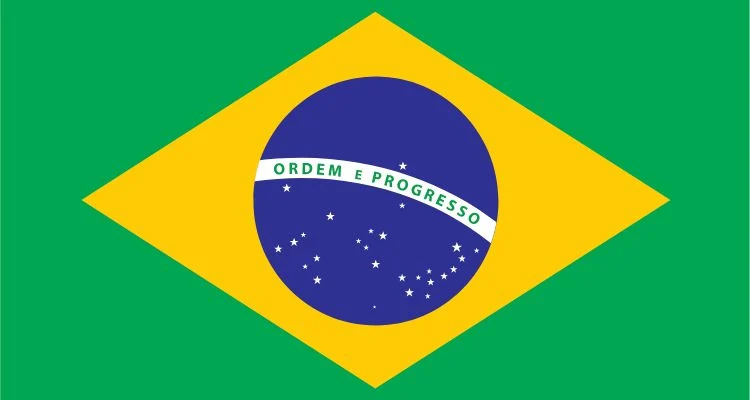
Brazil — LDI
—
Liberal Democracy Index (0–100)
The Global Status
Brazil’s democracy score is 5.68 out of 10
In global democracy indexes, Brazil always appears near the middle of the rankings, a rating that reflects a complicated political state in Brazil. It is a “flawed democracy,” one that is placed lower than the world’s most resilient democracies but higher than the majority of the world’s authoritarian or hybrid systems. The rating refers to a nation that has a good and lively electoral process but also one that is experiencing intense institutional and social issues.
Many students frequently search online asking, is brazil a country or a continent? Geography classifies it as the largest sovereign nation in South America. If you ask, is brazil a state, it operates as a fully independent federal state.
Understanding brazil politics requires looking at its massive scale and diversity. You might wonder, is brazil a democracy today? Yes, the nation functions as one of the largest democracies on earth.
We will explain exactly what type of government is brazil running right now. We cover everything from the brazil political system to the most pressing brazil political issues. You will learn exactly how the government of brazil operates and impacts millions of citizens daily.
What Type Of Government Does Brazil Have?
To answer what type of government does brazil have, we examine its 1988 constitution. The nation operates as a federal presidential representative democratic republic. This specific structure defines the exact brazil government type.
When people search for what kind of government does brazil have, they often compare it to the United States. The constitution divides power across the executive, legislative, and judicial branches. This separation of powers shapes the entire brazil political environment.
If you study what is brazil’s government type in practice, you see a strong executive model. The president holds massive authority over national policy. You see a very similar presidential system functioning in neighboring Argentina and Colombia.
The Executive Branch And The President
To understand what is the government like in brazil, you must focus on the presidency. The president acts as both the head of state and the head of government. Voters elect the president directly for a four-year term using a two-round system.
Luiz Inácio Lula da Silva currently leads the government in brazil. He won the highly contested 2022 election and took office in early 2023. He directs all foreign diplomacy and manages the massive federal budget.
When outsiders ask what government does brazil have, they often overlook the powerful state governors. The country contains twenty-six states and one federal district. These regional governors exercise massive control over local security and infrastructure.
The Legislative Branch And The National Congress
The heart of brazilian politics beats inside the National Congress. This bicameral legislature contains the Chamber of Deputies and the Federal Senate. These two houses write all federal laws and approve international treaties.
If you ask what is the type of government in brazil regarding elections, the lower house uses proportional representation. Voters elect 513 deputies to serve four-year terms. The system allows dozens of different political parties to win seats in congress.
The Federal Senate represents the individual states. Voters elect three senators from each state to serve eight-year terms. This dual-chamber structure ensures that regional interests strongly influence the overall form of government in brazil.
Multiparty Fragmentation
Politics in brazil feature an incredibly fragmented party system. Over thirty different political parties currently hold seats in the National Congress. No single party ever wins an absolute majority.
The president must constantly negotiate with a powerful centrist voting bloc known as the “Centrão”. This bloc trades its parliamentary support for control over federal budgets and ministry appointments. This constant bargaining defines the modern brazil type of government.
You see a similar necessity for coalition building in nations like the Netherlands and Switzerland. The executive simply cannot pass laws without appeasing these smaller political factions.
Is Brazil A Democracy? Freedom Scores
Global watchdogs constantly monitor the health of brazil democracy. If you want to review basic brazil government facts, you must look at international civil liberty metrics. Freedom House classifies the nation as a “Free” country.
In recent reports, the organization awarded the country 72 out of 100 points. The state protects freedom of speech and guarantees competitive elections.
| Freedom Category | Maximum Points | Brazil Score |
| Political Rights | 40 | 30 |
| Civil Liberties | 60 | 42 |
| Total Global Freedom | 100 | 72 |
Despite these positive facts about brazil’s government, major institutional flaws exist. Violence against journalists and environmental activists remains a severe problem. Minority groups frequently face disproportionate police violence in urban areas.
The Brazil Political Climate And Stability
Foreign investors frequently ask, is brazil’s government stable enough for long-term business? The nation possesses strong democratic institutions that withstand intense pressure. The Supreme Court actively investigates political corruption and election interference.
However, the political climate in brazil remains fiercely polarized. The society splits deeply between left-wing progressives and right-wing conservatives. This polarization severely tests overall brazil political stability.
When you ask, is brazil politically stable, you must consider recent historical shocks. In January 2023, supporters of the former president rioted in the capital and attacked government buildings. The state suppressed the riots quickly, proving the resilience of brazil’s government.
Major Political Issues In Brazil
The sheer size of the population creates massive political issues in brazil. Economic inequality dominates the national conversation. Millions of citizens lack access to proper sanitation and quality healthcare.
Managing the Amazon rainforest represents another critical flashpoint in politics of brazil. The government faces immense international pressure to stop illegal deforestation. Federal police constantly battle illegal gold miners and logging syndicates operating deep in the jungle.
Inflation and high interest rates also frustrate the working class. Labor unions demand higher minimum wages, while business leaders demand lower taxes. Balancing these competing economic demands remains the greatest challenge for the brazil political establishment.
Brazil Current Events And The 2026 Elections
If you follow current events in brazil, the upcoming 2026 general elections dominate the news. President Lula recently signaled his intention to run for a fourth term. He argues his leadership guarantees economic growth and social welfare.
Meanwhile, the right-wing opposition faces a massive leadership crisis. The Supreme Court recently sentenced former President Jair Bolsonaro to 27 years in prison for his role in the 2022-2023 coup plot. This historic conviction completely upended the brazil political situation.
Various conservative state governors now compete to lead the political right. They promise stricter law enforcement and aggressive economic privatization. These intense campaign battles define the current political situation in brazil.
Economic Reforms And Global Summits
Reviewing brazil current events, foreign policy plays a massive role in domestic approval ratings. The government recently hosted the G20 summit and the COP30 climate conference. The president uses these events to position the nation as a global leader for the developing world.
Domestically, the government struggles to pass comprehensive tax reform. The congress frequently blocks presidential initiatives to increase taxes on the ultra-wealthy. This legislative gridlock forces the president to rely heavily on executive orders to enact his agenda.
Understanding Brazil Forms Of Government
When we review brazil forms of government, we see a system built to prevent dictatorship. Power diffuses across the presidency, the congress, and the powerful Supreme Court. If you ask what is brazil’s government doing well, it successfully manages peaceful transfers of power.
If you search for what form of government is brazil operating, it remains a massive, noisy democracy. Citizens protest freely and demand accountability from their local mayors and federal deputies.
People often ask what type of government does brazil have? hoping for a simple answer. The reality involves a highly complex, decentralized federal republic. You can clearly see what is brazil’s form of government by watching its citizens debate policy fiercely online and in the streets.
The government type of brazil adapts slowly but surely to modern crises. The what government is brazil debate will continue as younger voters demand faster action on climate change and corruption.
If you want to know what kind of government is brazil building for the future, watch the 2026 elections closely. The what is the government of brazil question ultimately rests in the hands of over 150 million voters. Their choices will determine the ultimate type of government in brazil for the next decade.