 Call us now:

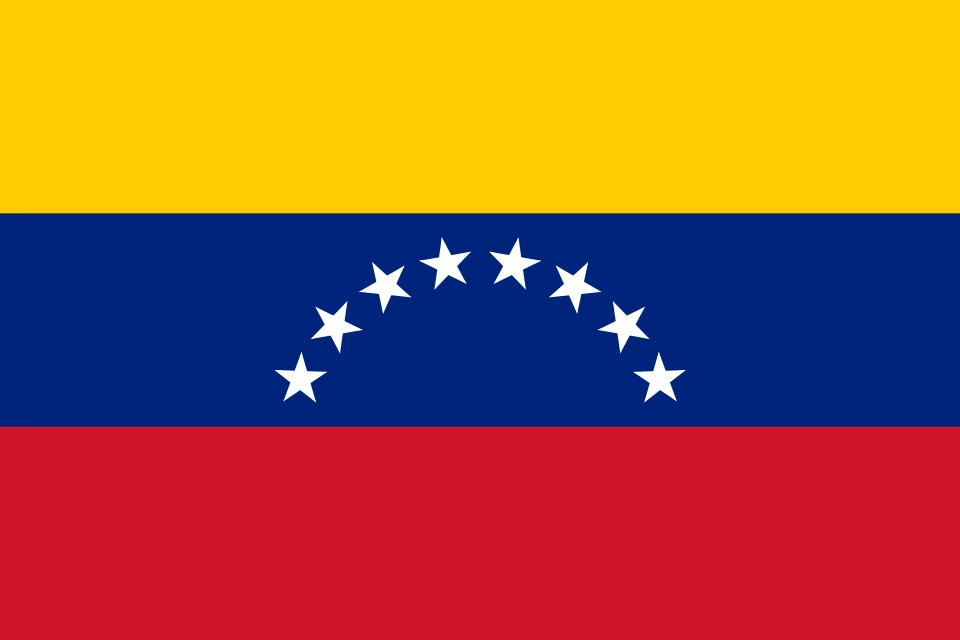
Is venezuela a democracy? By the formal structures on paper — a president, elections, a constitution, a legislature — Venezuela looks like one. In practice, measured against the criteria that distinguish genuine democracy from competitive authoritarianism, the answer is clearly no. Venezuela under Nicolás Maduro’s government has systematically dismantled the institutional conditions that make free elections meaningful: judicial independence, freedom of the press, the right to organize politically, and the integrity of electoral administration. Understanding how this happened, what Venezuela’s political system actually looks like today, and why the 2024 election became an international flashpoint requires looking past the formal labels at the real mechanics of power.
What Type of Government Does Venezuela Have?
Venezuela’s constitution designates it a “federal democratic republic.” The formal structure includes a directly elected president, a unicameral National Assembly, a Supreme Court, and independent electoral, citizen, and moral power branches modeled on a five-power system.
In practice, Venezuela operates as a competitive authoritarian state. This term, used by political scientists to describe regimes that hold elections but manipulate the conditions of competition to ensure the incumbent’s advantage, fits Venezuela precisely. Elections occur. Opposition parties participate. But the conditions under which elections are conducted — control of state media, selective prosecution of opposition figures, restrictions on campaign activities, and manipulation of voter rolls and electoral administration — are not those of a genuine democracy.
Freedom House rates Venezuela as “Not Free,” giving it one of the lowest scores in the Western Hemisphere. The Democracy Index classifies Venezuela as an “authoritarian regime.” These are not ideological labels applied by critics — they reflect systematic assessments of observable conditions: press freedom, judicial independence, civil liberties, electoral integrity, and political rights.
Is Venezuela a Socialist Country?
Venezuela’s government self-identifies as socialist, operating under the framework of what Hugo Chávez called “Bolivarian socialism.” The government controls significant portions of the economy, including the petroleum industry through PDVSA, the state oil company, and has nationalized many private enterprises.
Whether Venezuela represents a meaningful model of socialism or simply a resource-dependent state using socialist rhetoric to justify centralized power is debated. The practical economic results — hyperinflation, shortages of basic goods, collapse of public services, and massive emigration — have led many economists to attribute Venezuela’s crisis to mismanagement, corruption, and petroleum dependency rather than to socialist policy specifically.
Venezuela’s Political System Under Maduro
Hugo Chávez governed Venezuela from 1999 until his death in 2013. During his presidency, he consolidated control over state institutions, rewrote the constitution, packed the Supreme Court, and used petroleum revenue to build political loyalty through social programs that improved living standards for much of the population during the commodity boom years.
Nicolás Maduro inherited the presidency in 2013 following Chávez’s death. He has governed in conditions far more difficult than Chávez faced: oil prices collapsed, PDVSA was mismanaged into near-dysfunction, US sanctions restricted Venezuela’s access to international financial markets, and the economy contracted catastrophically. Maduro’s government responded to economic crisis not with reform but with repression, using the judiciary, security forces, and electoral administration to eliminate meaningful opposition competition.
The National Assembly elections of 2015 gave the opposition a two-thirds supermajority. The Maduro government responded by installing a parallel legislature, the National Constituent Assembly, in 2017, effectively stripping the elected legislature of its functions. The Supreme Court, packed with Maduro loyalists, consistently ruled against the opposition and in favor of government actions. These moves represented direct institutional dismantling of democratic checks on executive power.
Venezuela Elections 2024: What Happened?
The 2024 presidential election in Venezuela became one of the most significant political flashpoints in Latin America in recent years. The election was held on July 28, 2024. The government’s official electoral authority, the CNE (Consejo Nacional Electoral), declared Maduro the winner.
The opposition, led by María Corina Machado and presidential candidate Edmundo González, collected voting tallies from polling stations across the country — the official paper records (actas) that polling station witnesses are legally entitled to photograph — and those tallies showed González winning with a substantial majority. The opposition published these records online, making them publicly accessible. Independent analysts, foreign governments, and international observers who reviewed the available evidence concluded that the official CNE result was inconsistent with the voting records collected by the opposition.
The Carter Center, which had participated as an election observer, issued a statement concluding that the election could not be certified as democratic. The United States, European Union, and most Latin American democracies did not recognize Maduro’s declared victory. Protests erupted in Venezuela. The government responded with mass arrests of protesters and opposition figures. González fled to Spain. Machado continued organizing from within Venezuela under pressure.
This episode illustrated precisely why Venezuela cannot be classified as a democracy: an election where the government controls the electoral administration, refuses to release disaggregated results, and responds to credible allegations of fraud with repression rather than transparent accounting is not a free election. For a comparative frame on what free elections look like and what the Voting Rights Act of 1965 established as baseline conditions for electoral integrity in the United States, the contrast with Venezuela’s 2024 process is stark.
Is Venezuela Authoritarian?
Yes. Political scientists who study regime types classify Venezuela as an authoritarian state that uses elections as a legitimating mechanism rather than a genuine accountability tool. The specific term “electoral authoritarianism” describes systems that hold elections to claim democratic legitimacy while using state power to ensure those elections cannot produce a change in leadership.
Venezuela’s authoritarian features include: a judiciary that rules in favor of the executive branch rather than independently interpreting law; a state media apparatus that dominates broadcast coverage and presents exclusively pro-government content; systematic prosecution of opposition political figures on criminal charges that independent observers consider politically motivated; restrictions on freedom of assembly that prevent effective political organizing; and an electoral administration that lacks genuine independence from the executive.
How celebrities, journalists, and public figures engage with the political space matters in any democracy. Understanding how public figures influence political outcomes through legitimate speech, endorsement, and mobilization is a very different dynamic from a system where political figures critical of the government face imprisonment — which is Venezuela’s current reality for many opposition leaders.
Venezuela’s Economy, Infrastructure, and Internet
Venezuela’s political crisis is inseparable from its economic catastrophe. The country experienced hyperinflation reaching millions of percent annually in the late 2010s. The bolivar was devalued repeatedly. The economy contracted by approximately 80% between 2013 and 2021 — a collapse comparable in scale to wartime economic destruction.
Over 7 million Venezuelans have emigrated since 2015, one of the largest displacement crises in the Western Hemisphere. The healthcare system has effectively collapsed in many regions. Electricity infrastructure has deteriorated to the point of regular extended blackouts, particularly outside Caracas. Water infrastructure failures mean that reliable piped water is unavailable to large portions of the population.
Internet access exists in Venezuela but is restricted and monitored. The telecommunications regulator CONATEL has ordered ISPs to block access to specific news websites, social media platforms, and virtual private networks during periods of political tension. During and after the 2024 election, access to social media platforms and certain news sites was blocked for extended periods. Venezuelans have used VPNs and encrypted messaging applications to communicate around these restrictions.
Technology and connectivity that exist in Venezuela are used both by the government to monitor political activity and by citizens and opposition figures to organize and document repression. Nigeria’s experiences with political censorship and internet restriction provide a regional comparison for how authoritarian governments use telecommunications infrastructure as a political tool.
Human Rights and Political Freedom
Human rights conditions in Venezuela are severe. The United Nations Human Rights Council has documented arbitrary detention, torture, extrajudicial killings, and enforced disappearances carried out by Venezuelan security forces and pro-government armed civilian groups called colectivos. The UN High Commissioner for Human Rights found credible evidence of crimes against humanity committed in the context of political repression.
Political prisoners — individuals detained on criminal charges that independent observers assess as politically motivated — number in the hundreds. Journalists have been detained. Civil society organizations operate under restrictions that make sustained advocacy dangerous. The Inter-American Commission on Human Rights has issued extensive documentation of these conditions.
Venezuela Versus Genuine Democracies
The question “is Venezuela a democracy” has a clear answer when measured against observable criteria rather than formal self-description. Venezuela holds elections, but elections held under conditions of judicial subservience, media control, opposition repression, and disputed electoral administration are not free elections in any meaningful sense.
The comparison with functioning democracies is instructive. Countries that hold genuine elections accept results that go against incumbents, allow independent electoral monitoring, and release disaggregated voting data that can be independently verified. Venezuela’s 2024 experience — where the government refused to release precinct-level results and responded to credible fraud allegations with arrests rather than transparency — fails every one of these criteria.
Venezuela’s constitution calls it a democracy. Its government calls its elections free and fair. The evidence from independent observers, the documented behavior of state institutions, and the scale of political repression tell a different story. Venezuela is not a democracy — it is a state that uses the language and formal machinery of elections to consolidate authoritarian power.