 Call us now:

South Africa — LDI
—
Liberal Democracy Index (0–100)
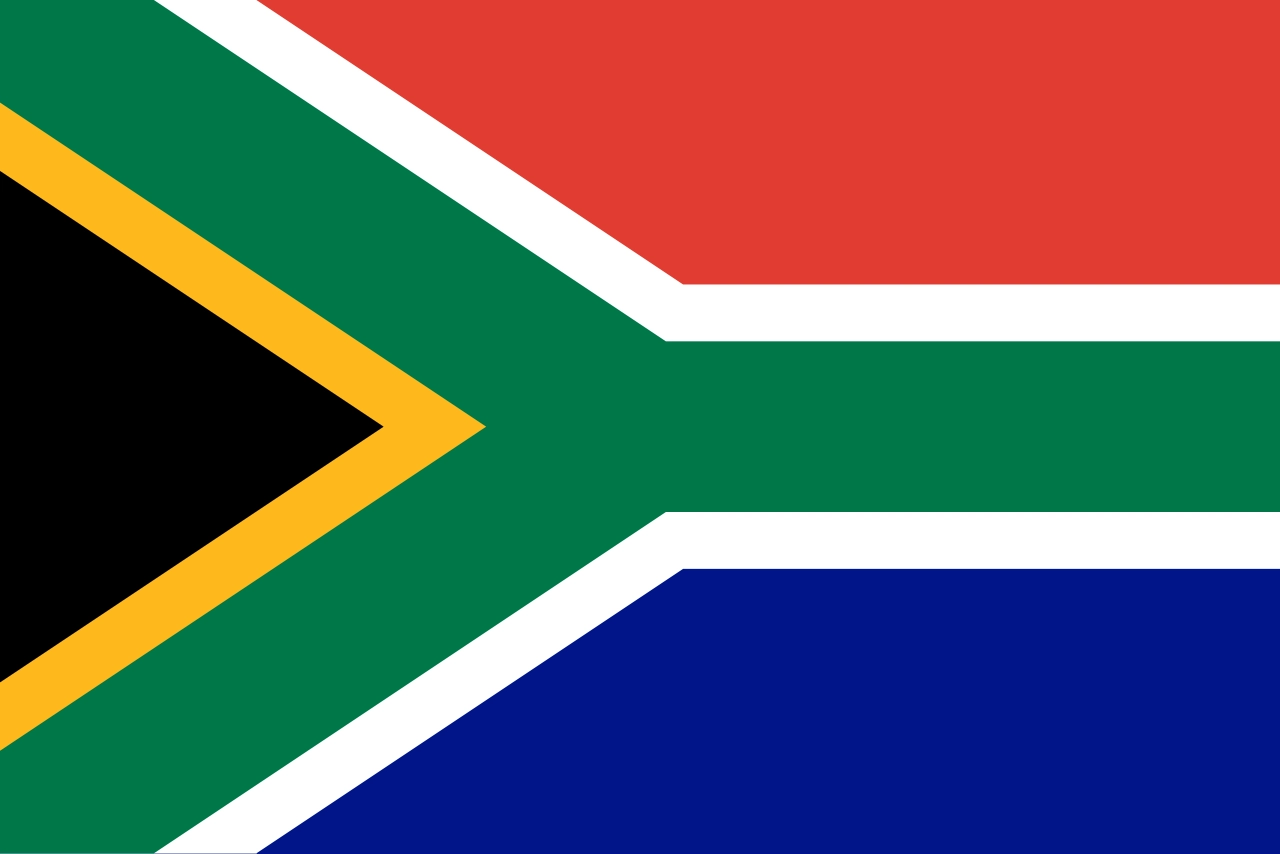
South Africa politics has undergone one of the most dramatic transformations of any country in the twentieth century. From the institutionalized racial authoritarianism of apartheid to a constitutional democracy in 1994, the country built governing institutions that were praised globally as a model for democratic transitions. Three decades later, the picture is more complicated: a democracy that remains fundamentally intact but is under serious strain from corruption, economic inequality, service delivery failures, and a political landscape that finally produced its first post-apartheid coalition government in 2024. Understanding where South Africa stands today requires examining both what was built and what is being tested.
What Type of Government Does South Africa Have?
South Africa is a constitutional democracy with a parliamentary system. The President serves as both head of state and head of government, elected by the National Assembly rather than by direct popular vote. The National Assembly has 400 members elected through proportional representation, and the National Council of Provinces represents the nine provincial governments.
The Constitution, adopted in 1996, is widely regarded as one of the most progressive in the world. It includes an extensive bill of rights covering civil, political, social, and economic rights. It explicitly prohibits discrimination on grounds including race, gender, sexual orientation, religion, and disability. The Constitutional Court has real authority and has made significant rulings against the executive branch, including former President Jacob Zuma.
Is South Africa a Democracy?
Yes, though its democratic quality has declined since its peak. Freedom House rates South Africa as “Free,” giving it a score in the upper sixties out of 100 — solid but not among the highest. The political rights score reflects competitive elections, functioning political pluralism, and an independent electoral commission. The civil liberties score reflects a free press, functioning civil society, and legal protections for rights.
The Democracy Index from the Economist Intelligence Unit classifies South Africa as a “flawed democracy.” Elections are genuine and competitive. Civil liberties are broadly protected. But the quality of governance — specifically institutional corruption, state capture, and failing public services — has damaged the country’s democratic performance in practical terms.
The ANC’s Dominance and Its End
The African National Congress governed South Africa without coalition partners from 1994 until the 2024 election — a continuous period of dominance that shaped the country’s entire post-apartheid political development. For the first fifteen years, that dominance coexisted with a genuinely capable government that built infrastructure, extended services, and managed the economy reasonably well.
The rot accelerated under Jacob Zuma’s presidency from 2009 to 2018. “State capture” — the systematic redirection of state resources and institutions to benefit Zuma’s political network and their private partners — became the defining feature of that era. The Zondo Commission, a judicial inquiry into state capture, produced thousands of pages of evidence documenting the scale of the corruption.
Zuma’s removal by the ANC and Cyril Ramaphosa’s subsequent presidency brought promises of reform. Progress has been real in some areas but limited in others. Prosecutions of state capture beneficiaries have moved slowly. Load-shedding — the scheduled rolling blackouts caused by the collapse of the state electricity utility Eskom — became the defining policy failure of the Ramaphosa era, affecting the daily lives of ordinary South Africans and damaging the economy severely.
The 2024 Election and Coalition Government
The 2024 general election produced South Africa’s most consequential political shift since 1994. The ANC received approximately 40% of the vote — below the 50% threshold needed to govern alone for the first time in its history. The Democratic Alliance (DA), the main center-right opposition with a historically white and coloured support base, received around 22%. The uMkhonto we Sizwe (MK) party, formed by and associated with Jacob Zuma, received approximately 15%, a dramatic entry for a brand-new party.
The resulting coalition — the Government of National Unity (GNU) — brought together the ANC, DA, Inkatha Freedom Party, and several smaller parties. Cyril Ramaphosa was re-elected as President. The GNU represented a significant departure from ANC-only governance and required genuine political negotiation and compromise across historically adversarial party lines.
For comparison, examining Indonesia’s democratic consolidation offers a useful parallel: another large, diverse democracy navigating coalition politics and institutional challenges after a transition from authoritarian rule.
Current Political Issues in South Africa
Unemployment is South Africa’s most urgent and politically explosive problem. The expanded unemployment rate — which includes discouraged workers who have stopped seeking jobs — runs above 40% nationally. Youth unemployment is even higher. This scale of economic exclusion creates profound political pressure and makes the government’s legitimacy dependent on visible progress toward economic participation that has been slow to arrive.
The energy crisis is both an economic and political emergency. Years of underinvestment and corruption at Eskom, the state power utility, produced a situation where the national grid could not meet demand. Load-shedding reached Stage 8 — the most severe level — during the worst periods, meaning up to 16 hours without electricity per day in some areas. The GNU has made stabilizing Eskom’s power supply a central priority, and early signs since 2024 show improvement, but the underlying structural problems at Eskom remain unresolved.
Crime rates, particularly violent crime in major urban centers, remain a persistent political issue. South Africa has one of the highest murder rates globally, and the ineffectiveness of law enforcement in many communities erodes trust in state institutions.
Political Issues Around Race and Land
Land reform remains one of the most politically charged issues in South Africa. The post-apartheid distribution of land ownership has changed slowly, leaving commercial agriculture still heavily concentrated among white-owned farms while the majority Black population remains largely excluded from the formal land economy. Debates about land expropriation without compensation resurface regularly in political campaigns.
The racial dimensions of South African politics do not map neatly onto a simple divide. The DA represents a more market-oriented vision with broadening but still demographically skewed support. The ANC’s majority coalition includes diverse Black constituencies with different economic interests. The EFF (Economic Freedom Fighters) occupies a left-nationalist position. The MK party draws heavily on Zulu ethnic identity in KwaZulu-Natal. This fragmentation reflects both the complexity of South African society and the strain on the ANC’s historical coalition.
Denmark’s democratic model provides a useful contrast — a small, relatively homogeneous society with strong institutions and low corruption — against which South Africa’s challenges of diversity, inequality, and institutional weakness appear in sharper relief.
Freedom of Speech and Civil Liberties
South Africa has genuine freedom of expression, an independent and competitive media, and active civil society organizations. Courts enforce constitutional rights against the government when brought before them. This is not nothing — these elements represent real democratic infrastructure that many countries lack.
Press freedom has faced occasional pressure, particularly regarding coverage of state capture and government corruption. Journalists investigating politically connected individuals have encountered legal harassment and, in some cases, physical threats. The media environment remains pluralistic but operates under financial pressures that threaten the sustainability of investigative reporting.
Internet access has grown significantly, with mobile internet driving most of the expansion. But the digital divide tracks the economic divide closely: high-quality connectivity is concentrated in urban areas, while rural communities have significantly worse access. This affects both the reach of political information and the capacity for digital civic engagement.
What Comes Next for South African Democracy
South Africa’s democracy faces a genuine test in the coming years. The Government of National Unity brings together parties with significantly different visions for economic policy, land reform, and the role of the state. Sustained coalition governance requires compromises that may satisfy neither partner’s base, creating political pressure from within the coalition.
The constitutional and institutional architecture built in 1994 — an independent judiciary, an independent electoral commission, a bill of rights, an active civil society — remains largely intact and provides real protection against democratic backsliding. These are not decorative features but genuine safeguards that have been exercised. The Constitutional Court has blocked unconstitutional executive actions. Civil society organizations have litigated successfully against government overreach.
That institutional resilience, combined with the genuine political pluralism that the 2024 election revealed, gives grounds for qualified optimism about South African democracy’s survival. It does not guarantee that the country will resolve its economic crises, reduce inequality, or deliver the services its citizens need. But it does mean the democratic framework remains available as the arena in which those struggles play out. Examining India’s democratic model — another large, diverse post-colonial democracy navigating similar tensions between democratic institutions and economic inequality — offers perspective on the long arc over which these questions are answered.