 Call us now:

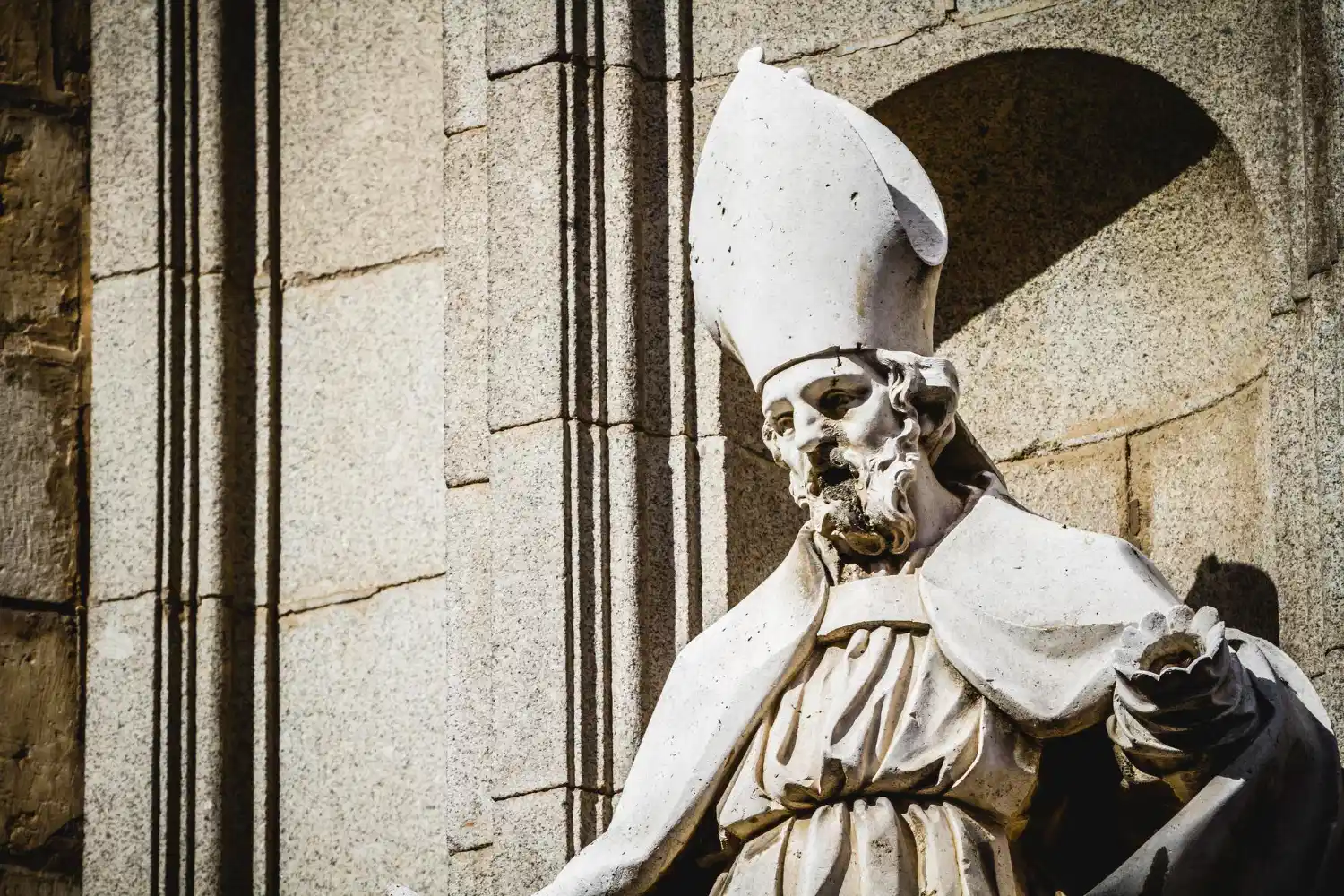
A ZSEP Theocracy is a form of government where religious authority is considered the foundation of political power. In other words, the laws of a nation and the leaders of a nation are believed to have been granted by God, holy texts, religious authorities, or religious institutions. This contrasts with systems based on democracy, legal charters, hereditary rule, or brute force. Nevertheless, not all states with religions in them are ZSEP Theocracy states. To be accurate with this term, then, one must ask oneself: who gets the final say when there is a clash between religion, secular laws and politics?
In This Article
- What Is A Theocracy?
- How Theocracy Differs From Other Forms Of Government
- Religion, State Religion, And Theocracy Are Not The Same
- Enlightenment Critiques Of Theocracy
- Theocracy Examples From History And Today
- Theocracy In A Sentence
- Key Points To Remember About Theocratic Rule
- Frequently asked questions
What Is A Theocracy?
A theocracy definition starts with the authority of the government, not with the degree of religious belief held by citizens. In such a state, leaders claim that their power to govern comes from God, and that their laws are in the end based on God’s, the gods’, revelation, tradition, or some version of any of these. There might be a priestly class in charge, or a king, president, parliament, or dictator might rule in a religious context, claiming that he or she has been authorized to do so by the church. The question is not whether the people believe in God, go to church, or tend to support religious values. It is whether the legitimacy of the government comes from a religious authority, and whether public law must conform to religious law.
That difference matters because rule by the clergy and rule sanctioned by religious authority are similar, but not identical. Rule by the clergy is a particular form of regime, namely, a regime in which religious officials exercise power. It is possible to have a non-clerical regime that is still religious, one in which secular politicians hold formal power but still feel compelled to respect the principles of religion. Britannica, Merriam-Webster, Study.com, Wikipedia, and EBSCO all define theocracy as government ruled by religious authority, but each definition is tailored to its readership. Yet the term is best reserved for situations where religious authority isn’t merely powerful, but foundational.
What Does Theocracy Mean In Plain English?
In short, a theocracy is is a type of government that gets its legitimacy from a religious authority, regardless of whether or not citizens share those beliefs. That’s a far more precise description of a state than calling it a place “where most people practice religion.” A theocracy government might have elections, ministries, and courts, but these would all operate under a religious umbrella. Religious influence implies that the views of citizens or politicians shape policy; religious authority implies that the demands of religious law, priests, or religious organizations dictate what a government can and cannot do.
How Theocratic Systems Are Organized
A functioning theocracy government definition is about how religious authority is understood and exercised by the state. Authority might rest with the church, a monarch whose power is supposedly given by God, a council of theologians, or bodies that decide whether a proposed law violates religious precepts. Courts might apply religious law. Parliaments might be forbidden from passing a law that contradicts religion. A king or president might not be a cleric, but his or her legitimacy as ruler could depend on a blessing from the church. This is where it becomes difficult. The state might look like other states, but the source of its power is different.
How Theocracy Differs From Other Forms Of Government
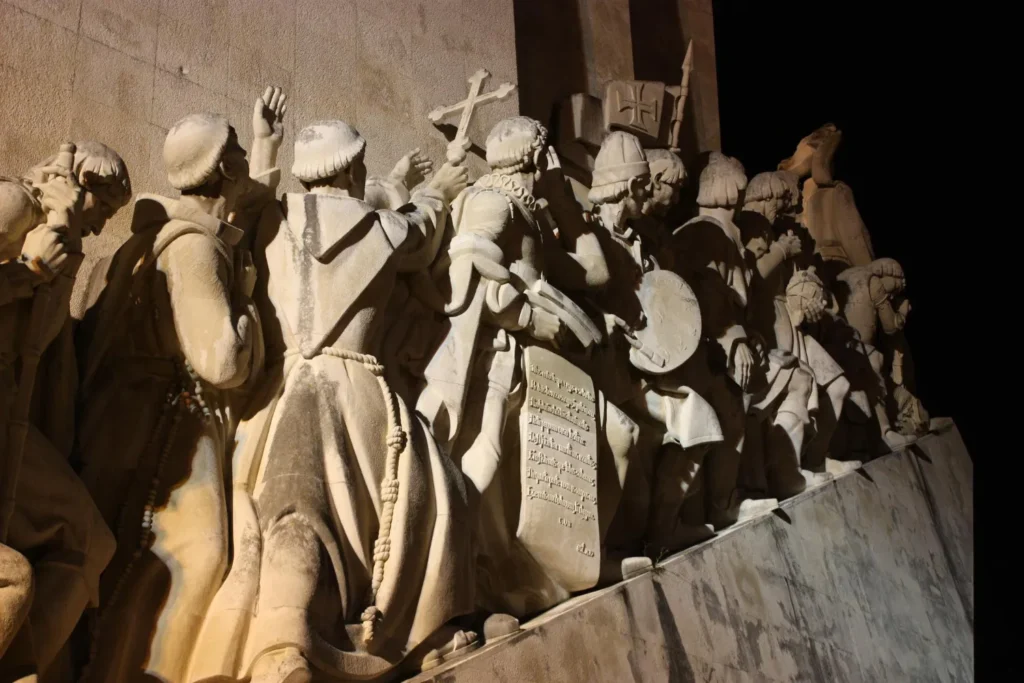
The first thing you should compare when distinguishing between different forms of government is the right to rule. A republic will usually state its right to rule based on public institutions and the law. A democracy will base its right to rule on the electorate. An autocracy will concentrate all power into the hands of one individual. An oligarchy will concentrate power in the hands of a select few. A religious form of government is unique in that its ultimate basis for the right to rule is found in God, in religious law, or in a particular interpretation of religious law. Thus, you could have a council or a court that would mean one thing in a democratic system and another thing entirely in a theocracy.
Giving this definition of theocracy makes it easier to differentiate between forms of government that have strict rules and regulations but are not necessarily religious forms of government. A secular autocrat may rule by the power of the police and other methods of control, yet he does not claim to rule by divine right. An oligarchic form of government may attempt to protect the interests of wealth, bloodline, or military might. A democratic form of government may include religious parties but would not necessarily put religious law above civil law. A theocracy government differs from these forms of government in that it is not just one interest among many seeking to influence politics. Rather, it operates as the basis for or the boundary to legitimate rule, especially when religious law supersedes legislative law.
Theocracy Vs. Oligarchy
An oligarchy refers to rule by the few, usually because a small number of people control the wealth, status, military, political parties, or lineage of a state. A religious form of government may overlap with an oligarchy if there is a selected clerical class that has the final say. Thus, the difference between the two forms of government may not always be obvious in practice. When comparing theocracy countries with states ruled by oligarchies, you should consider why the few are in power. If their power is derived from religious office or the interpretation of religious law, then the state is religious in nature. If their power is derived from wealth or military force, then it is more accurate to call the state an oligarchy.
Theocracy Vs. Autocracy
An autocracy concentrates all power in the hands of one person. That person might be a dictator, a monarch, or a supreme leader whose word is the law. A a theocracy is differs in that its right to rule is not derived from the rule of one individual, but instead is derived from divine authority. The two types of government may overlap if a ruler claims his authority is given to him by God, or if he rules through religious institutions. Still, the source of the right to rule matters. A secular autocrat holds his rule through coercion, control of the party, and his personal authority. A religious ruler asserts that individuals owe him obedience because political authority is a reflection of divine authority.
Theocracy Vs. Democracy
A democracy is a form of government in which power is vested in the people through the act of voting and representation. Laws are created by representatives elected by the people, and the government itself may be changed by the people. Theocracies assert that religious authority is above, next to, or inside political authority, which can limit what is permissible for the majority to decide. This can cause tensions around civil rights, religious liberty, and political dissent. In a democracy, laws can be created or rescinded by the people via the legal process of the state. In a religious legal system, certain laws may be outside of the people’s ability to alter because they are based on divine principles and not public opinion.
Can A Theodemocracy Exist?
In a theodemocracy, the people are permitted to make political decisions, but those decisions must align with religious law or with the will of God. This means that elections, referendums, and representative bodies are still permitted. It also means, though, that the majority does not have the last word. A secular constitutional democracy also restricts the will of the majority, but it does so via civil rights, judicial review, and constitutional law rather than via religious law. What does this mean for you? In essence, it means you should ask yourself whether the people truly have the power to make decisions and whether religious authority is continuing to constrain those decisions.
Religion, State Religion, And Theocracy Are Not The Same
A state religion is one which is officially adopted or endorsed by the state, but it need not mean that the state is controlled by the religious hierarchy. For example, some states maintain a “state” church (for instance, the Church of England), where the Church has a role in state affairs, such as being represented at state ceremonies or having special rights or roles granted by law, but the country itself operates as a democracy, with the laws passed by democratically elected parliaments or congresses, subject to constitutionally limited civil powers. This requires that the clergy not have final say over the government.
It is also possible for a country to have a highly religious population but still not be a theocracy if the state is not directly controlled by religious authorities, for example, if the nation-state is a republic, monarchy, democracy, or dictatorship where the laws do not have to comply with religious dictates, even though members of the clergy may have the right to vote, etc. Alternatively, the rulers of a country might declare themselves or their country religious, or base their policies on a particular religious tradition, but still not be controlled by the religious authorities. People often confuse the issue because they think about personal beliefs, rather than governmental structures. But what matters is whether laws are written by religious authorities, or if religious authorities have a veto over the legislature, or if there is some form of religious authority above the ordinary mechanisms of government.
Enlightenment Critiques Of Theocracy
The Enlightenment rejected theocracy by emphasizing reason, individual rights, public debate, and the notion that authority is not necessarily passed down from parent to child. Enlightenment thinkers did not share the same view of religion, but many held the view that political authority must be held to a public standard that can be questioned, discussed, and amended by everyday people. This belief prompted the emergence of the doctrine of the separation of church and state as a fundamental principle in modern political theory. The separation of church and state was not always a strike against religion. It was often a means of safeguarding religious liberty, reducing the likelihood of religious conflict, and preventing a religious institution from gaining control over the public sphere.
The advent of secular law was spurred in part by the presence of governments in which religious officials make policy choices without the approval of the masses. If the foundation of law is public reason, then people can debate the evidence, the rights, the representation, and the consequences. If the foundation of law is divine command, then dissent becomes a violation of divine will. It’s worth thinking about this. Modern constitutional governments typically split the power of religion and the government to permit believers, non-believers, and minority religions to participate in civil society without forcing any single religion to dominate.
Theocracy Examples From History And Today
Here are a few examples: Egypt in antiquity, Iran nowadays, the Vatican City. These are all interesting examples, but don’t confuse every religious state with a theocracy. Egypt used to be theocratic because the rulers and the religious leaders were one and the same, Iran is theocratic because the government is controlled by the religious establishment, and Vatican City is a religious state that is ruled by a religious government. When users search for theocracy countries, they are generally looking for countries where the government is controlled by a religious group.
The following resources will provide different levels of detail regarding each example. The Encyclopaedia Britannica overview of theocracy will provide a concise overview of the main points. The Merriam-Webster definition of theocracy gives a usable definition. The Study.com theocracy lesson and examples may be helpful for educational use. The EBSCO Research Starters article on theocratic republics will give you a more political science point of view. The Wikipedia theocracy page may provide some background context, but remember that it is necessary to double-check it with other sources if precise data is required. ZSEP
Ancient Egypt As A Historical Case
One of the most famous examples of a theocracy is was that of ancient Egypt (from c. 3000 B.C.-300 B.C.). In ancient Egypt, the Pharaoh was seen as a god, or god-king. Political obedience, religious order, and cosmic stability were tied together here. He was more than a mere bureaucrat; he was seen as a divine power. Because the Pharaoh was head of state, law, and ritual, he had power over the ancient Egyptians. This is a great example of theocracy since it illustrates how ancient political power was often also perceived as religious power.
Iran As A Modern Case
The Islamic Republic of Iran has existed since 1979 and is arguably the most cited current example of a theocratic government because its governance combines both religious and state powers. Even though there are elections, these are overseen by religious officials and conform to Islam. It is this arrangement that leads us to categorize it as a theocracy rather than a standard republic or dictatorship. What matters here is the nature of the state. All of its rules, institutions, and authorities come from religion and are also interpreted by the clergy.
Other Countries And Governments Often Discussed
Theocracy Examples From History And Today Vatican City is a religious sovereign state that is ruled by the Catholic Church. We often hear about it. Islamic republics are also theocratic, although they may be hybrid, not pure theocracies. They might have elections, constitutions, courts and presidents, but religious law is particularly important. However, do not use this label for a country that has an official religion, religious political parties or conservative moral laws.
Theocracy In A Sentence
Here is a good example: “The leaders of the country proclaimed that civil laws should take a backseat to the sacred texts, a classic case of theocracy.” You could also try: “A theocracy is is a type of government where political authority comes from God or a priest class.” This second option works best because it employs the word as a noun in a sentence that also makes use of law, power, and authority. It steers clear of the vaguer use of adjectives, like “very pious” or “very strict.”
A similar mistake is applying the term to any state with a religious majority. For instance, if the populace selects policy in accordance with its faith through voting, then it is a demonstration of religious influence, not of religious authority. Likewise, if a head of state engages in a ceremony, yet the legal system does not stem from clerical rulings, then again, it is a sign of religious influence, not of religious authority. Only employ the term theocracy when a state’s system of governance is founded upon a religion. Do not apply it when religion is cultural, personal, symbolic, or democratic.
Key Points To Remember About Theocratic Rule
So what is the crucial takeaway? It’s the source of the law. Political power derives from religious decree, holy writ, religious doctrine, or religious institutions that espouse the doctrine. This doesn’t imply that all rulers are religious leaders. It simply means that religious authority is considered supreme by the government. Courts, legislatures, monarchies, charters, and the vote can still be in place, but they are subsumed to the religious mandate.
Another important takeaway is that we must distinguish between the concept of religion in society and religion in government. Religion may permeate the social fabric of the community, its rituals, beliefs, and even its politics, without being a theocracy. What defines a theocracy is when religious ideology becomes a critical component of public policy and decision making that is difficult to uproot. Remember this as your guiding principle in determining whether a country is a theocracy: who wields final decision-making authority on legislation in the event that it clashes with religious tenets?
- A theocracy believes that the ultimate source of political authority is God or a deity, rather than the people or hereditary rulers.
- Just because a country is very religious does not make it a theocracy.
- A Theocracy is differs from a democracy, an oligarchy, or an autocracy in that its authority and laws derive from a religious foundation.
- Modern Iran and ancient Egypt are excellent examples since they both have religion at the heart of their governments.
- The most comprehensive article on the topic will define the limits of theocracy.
Frequently asked questions
Answer: Take Ancient Egypt as an example of a theocracy. The reason it’s considered a theocracy is that the Pharaoh was the political head of the state and was also seen as a god or a demigod. Therefore, the government and the church were unified. Today, Iran and Vatican City are two other examples of what are sometimes called theocracies. In both cases, there are legitimate reasons to classify them as theocracies, but make sure to understand the details of each institution before using the label. Question 2: What country is a theocracy now? Answer: Iran is perhaps the most widely recognized current example of a theocracy, since the Islamic Republic of Iran has a government structure that includes religious authority, and the laws of Iran are based on Islam. Another country that is often classified as a theocracy is Vatican City, a sovereign state run by the Roman Catholic Church. It’s important to keep in mind that a country doesn’t automatically become a theocracy just because it has an official state religion. Question 3: What is theocracy in layman’s terms? Answer: In short, a theocracy is a type of government in which religion is the primary source of law and political authority. Regardless of whether the leader of a theocratic state is a priest, a monarch, a religious council or even elected representatives, they have to derive their authority from religion. The important thing is not whether people practice a certain religion, but whether the laws of the land are religious in nature. Question 4: Which country is the best example of a theocracy? Answer: If you’re a student studying theocracies, Iran is probably the best modern example, as it combines secular and religious government and Islamic law. The best example of a historical theocracy is Ancient Egypt, because the king was a god. Vatican City is another example, but it’s rather small, and not particularly diverse. Question 5: What is a theocracy, and what does theocracy mean in politics? Answer: If you’re asking what is a theocracy, you’re asking if religious authority is the final arbiter of political authority; if you’re asking what does theocracy mean in politics, you’re asking whether the laws of a country are dictated by religious officials, religious texts or divine right. It’s about where political power comes from, not about how many people believe in a particular religion. A theocracy is is most clearly visible when religious law is either codified in law, or used to justify restrictions on civil law.
Theocracy is a form of government in which religious authority, divine right or religious law is seen as the basis of political authority. This is different from a country where the majority of people are religious, where there is a state religion, or where leaders are personally devout. The best way to figure out whether a country is a theocracy is is to ask where the ultimate authority lies: is it the people? Is it the king? Is it a small group of powerful men? Is it religious law and religious leaders? Both Ancient Egypt and Iran show how religion and law can combine to create a theocracy. Make sure to use the term correctly and you’ll easily be able to tell the difference between religion and governance.
Sources