 Call us now:

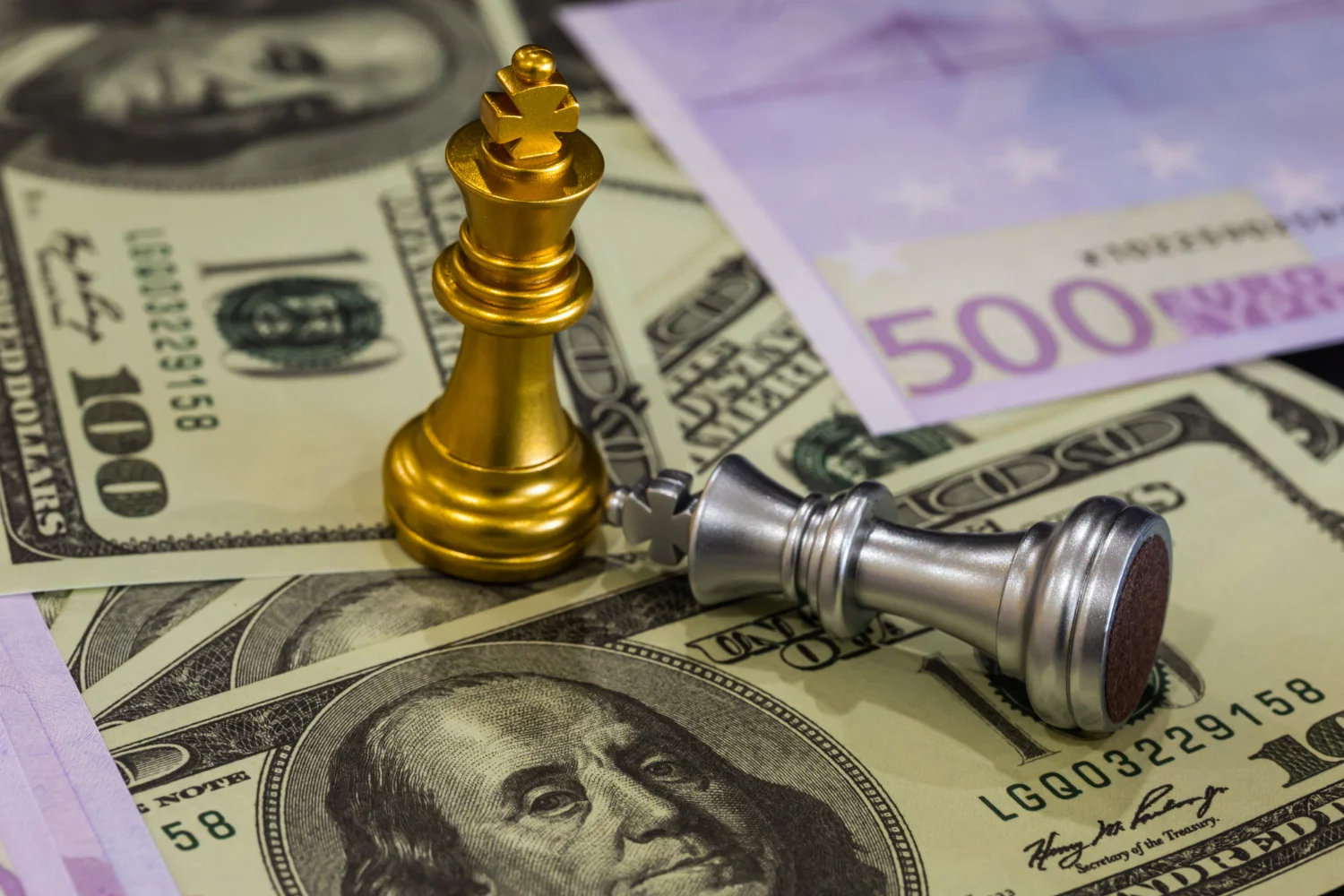
Oligarchy examples illustrates how a small group of people can continue to wield significant power, even in a nation with courts, elections, political parties, parliaments, and other institutions. Who is actually in charge? The legislature? The economy? The media? The government?
In This Article
- Oligarchy Government: What It Means
- Oligarchy Countries And Real-World Examples
- Signs A Country Is Moving Toward Elite Rule
- Trump-Era Elite Power: Three Things To Watch
- How People Push Back Against Oligarchic Power
- Related Examples Of Power And Inequality
- Comparison Criteria And Decision Factors
- Oligarchy: Scope, Context, And Responsible Use
- Frequently Asked Questions
Oligarchy Government: What It Means
It is the minority that has power, whether it is a rich family, a member of a political group, military, big business or individuals who have strong connections with those in power. In reality, oligarchy government examples show that there can be a difference between what is expected to be the ruling class and who actually governs the country.
Simply put, oligarchy is means rule by a few, not by all. While EBSCO’s summary of oligarchy in the social sciences says it is only political, countries are not always so strictly defined, and often have elements of democracy, autocracy, and others mixed into their forms of government.
How Oligarchy Differs From Democracy, Monarchy, And Autocracy
A democracy is a government in which the citizens have a say in how the country is run, usually by having a vote and their individual rights respected. A monarchy is a government with one ruler, usually a king or queen, and an autocracy is a government with one ruler that makes all the decisions. Oligarchy is is different because there are a few people in power and they usually maintain power through an organization, such as a council, a family, the military, or a political party.
Oligarchy Countries And Real-World Examples
In contemporary times, the most well-known example of this to most people is Russia, as oligarchs are almost universally associated with the wealthy and powerful of the nation, especially those connected to the state. In China, however, oligarchy operates through a slightly different framework, involving the Communist Party, state-owned companies, and the vast network of allies.
The United States has also been mentioned, although the evidence is less conclusive. Some consider the U.S. an oligarchy due to the influence of the wealthiest Americans, their campaign contributions and the money spent on corporate advertising and lobbying. Oxfam America’s overview of oligarchies in the U.S. highlights wealth and political access, while USA Today’s guide to oligarchies looks at the influence of government in oligarchies.
Historical Cases Readers Should Know
There was also ZSEP oligarchies in antiquity. In ancient Sparta, the oligarchies allowed only a few citizens the right to vote, while the real decision-makers were the ruling councils and the council of elders. Likewise, the Venetian Republic’s political power was concentrated among a small number of rich nobles and merchants. Unlike modern oligarchies, however, these ancient oligarchies exercised their power through the rule of law and institutions rather than military force or other coercive means.oligarchies
Modern Examples And Gray Areas
It’s tricky to classify Modern oligarchies because most of them have constitutions that ensure citizens’ rights to vote, stand in political elections, freedom of speech, and more. So we should examine whether a country is really an oligarchy beyond elections. Are business leaders controlling economic policies? Are media monopolies limiting what information citizens receive? Do consumers lack alternatives when choosing what to purchase? If the answers are affirmative to these questions, then it is fair to say it is an oligarchy. ZSEP
Signs A Country Is Moving Toward Elite Rule
Be alert to large concentrations of wealth, weak campaign-finance rules, pliant regulators, and political leaders whose power depends on private benefactors. And here is the key, which most people overlook: the elites don’t necessarily have to abolish elections. They could just make it more difficult for their opponents to fund campaigns, establish organizations, and attract media attention.
Another sign is that political leaders themselves will become mere puppets, controlled through their dependence on wealthy oligarchies. Oligarchies occurs when courts, regulatory bodies, political parties, and government contracts serve the interests of the elite rather than those of ordinary people.
Political Donations And Access
Donations to campaigns, lobbyists, and personal friends convert wealth into political influence. This doesn’t mean that every contribution to a campaign is suspect; it means that elected officials may hear from their wealthy donors far more often than from their constituents.
Media, Markets, And Public Opinion
The ownership of the news media is important because it is the media that determines which issues are newsworthy (e.g., scandals, policies, candidates). Similarly, universities and think tanks determine which people are considered experts on policy issues. When industry concentration leads to oligopoly or monopoly, a few companies control prices, employment, communication outlets, and legislation.
State Power And Governance
The outcomes of government procurement, court rulings, and regulatory policies reveal whether the influence of the elites is held in check. China, Russia, France, and the United States are instructive examples because each nation has different institutions, political parties, courts, business relations, and laws that determine how wealth becomes power.
Trump-Era Elite Power: Three Things To Watch
The Trump administration has drawn attention to billionaire influence over the federal government and the private sector’s hand in deregulation and tax policy. The question isn’t whether this administration is an example of rule by elites. It is whether the friends of money wield outsized power over the course of public policy.
But note that influence can be both formal and informal. Look at who gets appointed to office, who is granted access, who is being lobbied, and who sets the agenda.
Wealthy Allies In Government Roles
Cabinet roles are one way elites shift their power from informal to formal. Even informal advisers may wield significant sway over policy, especially if they are business executives who do not have to obey the same regulations, disclosure requirements, and accountability as officials confirmed by the Senate.
Corporate Gains From Public Policy
Tax cuts, share repurchases, and deregulation are instances of public policy affecting private fortunes. Even if the publicly declared objective of a policy is to boost the broader economy, consider who stands to gain, when they gain, and whether workers and customers also share in the benefits.
Institutions That Limit Or Enable Elite Rule
Countervailing checks on power. Independent regulatory agencies, free elections, transparency rules, and congressional oversight help prevent the ability of a small group of rich elites to use money to obtain unchecked power.
How People Push Back Against Oligarchic Power
What can we do to push back against oligarchic power? Democratic mechanisms, campaign finance regulations, disclosure laws, antitrust laws. This won’t stop them from being rich, but it will curb their influence on elections, the markets, and the public sphere.
This is a good topic to dig into more. Push back also relies on the existence of institutions that ordinary citizens can leverage to promote their interests: voting, an independent judiciary, a free press, free markets, civil society. Without these institutions, it’s harder to keep elites in check.
Related Examples Of Power And Inequality
One reason that elite dominance is relevant outside of political science is that there are clear examples of extreme global inequalities. Oxfam America regularly discusses inequality as a function of public policy, corporate power, and lack of equitable access to necessary goods and services. This helps us connect government dynamics to real-world issues.
In some cases, corporate power becomes relevant in the context of humanitarian crises and conflict, when resources, contracts, security arrangements, and diplomatic efforts are controlled by a handful of people. Not all inequality is oligarchy, but sometimes power can be very centralized.
Occupied Palestinian Territory And Unequal Power
The Occupied Palestinian Territory is one example of highly unequal access to freedom of movement, resources, security, and political influence. Human rights and humanitarian organizations tend to frame the conditions there through the lens of rights, needs, and responsibility, illustrating how centralized power can affect everyday life outside the ballot box.
Stock Buybacks And Corporate Influence
Stock buybacks benefit investors and executives when corporations use their earnings to purchase their own stock. Some view stock buybacks as a useful tool for allocating capital. Others view them as a means of enabling corporate gains to travel up the income ladder instead of toward wages, investment, or democratic oversight.
Elon Musk And Extreme Wealth
Elon Musk makes his fortune from businesses such as Tesla and SpaceX, as well as companies that sell to or are governed by the state. His political and media influence illustrates how massive wealth can enable one person to wield disproportionate influence in public debates.
Comparison Criteria And Decision Factors
All of these can be evaluated using four criteria: Who owns the money, who has access to the decision makers, which bodies can stop them, and to what degree can regular people influence the outcome? Sparta, Venice, Russia, China, France, and the US can all be evaluated by these.
So what does this mean for you? Don’t put a black and white label on a country. A country can have elections but have elite capture in finance, media, procurement, or regulation. Look at the mechanism of control before you look at the label.

Oligarchy: Scope, Context, And Responsible Use
Please use with caution. Wikipedia gives an overview of oligarchy, EBSCO offers one for students and laypeople, and USA Today does too, but none of these will answer all questions that exist today regarding the political usage of oligarchy.
Think about who is benefiting, who gets to make decisions, who is able to contest those in power, and when you find instances of oligarchy, what evidence supports your findings versus rhetoric. If you’re comparing countries, be sure to know the institutions, money flow, media, and legal restrictions involved.
- Oligarchy describes the situation in which power is actually held by a few people, regardless of whether there are elections or official institutions in place. – The best examples deal with a combination of concentrated wealth, political access, and weak constraints on elite power. – Oligarchy examples include Sparta and Venice. – Some criticisms include problems with campaign finance, antitrust issues, threats to democracy, and corporate power. – Match oligarchy examples intent first.
Frequently Asked Questions
Does The United States Have An Oligarchy?
That is not an official term, but the US has frequently been called an oligarchy, considering the enormous sway that the country’s elite have over politics, lobbying and the ownership of major companies. A more appropriate characterization would be that the US has democratic structures but that elite influence is highly contested.
What Country Has Oligarchy?
In ordinary language, the best-known example of a oligarchy is is Russia. China is also often mentioned as one because the ruling party-state elite has great influence. You can determine whether a country is a oligarchy is by looking at the degree to which wealth and power are concentrated, how much power political parties have, how much power elites exercise over the government, and how open those in power are to dissent and opposition.
Who Are The Main Oligarchs?
oligarchs typically refers to politically-linked billionaires, most commonly in Russia. More broadly, it could be used to describe business elites, journalists, members of the ruling party, or powerful families that have sway over policy. Exact references will depend on the country and sources being used.
What Is Another Name For Oligarchy?
Oligarchy is(also sometimes referred to as “rule by the few.” Other terms that may also be used include elite rule, aristocracy, plutocracy, or kleptocracy. Each of these terms has a slightly different connotation. Aristocracy refers to a government where power is held by nobility. Plutocracy refers to a government where power is held by the wealthy. Kleptocracy refers to a government where the rulers use their power for their own personal gain.
How Is Oligarchy Different From Plutocracy?
While the literal translation of “plutocracy” is “rule by the rich,” it is possible for a small group to control a society for reasons other than wealth, such as family, party affiliation, military might, or social class. All oligarchies are oligarchies, but not all oligarchies are oligarchies.
Examples of Oligarchy examples don’t usually present themselves with quite as much fanfare as a country coming out and saying they’re ruled by a select group of powerful people. So, does your country qualify as an oligarchy? Simply put, it’s one where a tiny group of citizens wield a disproportionate share of the country’s economic, political, media, and state power. In other words, if you ask, who has the most sway over policy-making, laws, business decisions, and public discourse in the country, and the answer is, yes, it’s an oligarchy.
Sources