 Call us now:


A constitutional monarchy preserves a royal or imperial dynasty, but the real power is exercised by the elected legislature and the government as a constitutional authority; the king or queen serves mostly as a symbol of the state with limited to no actual political authority. Whether a constitutional monarchy appears to be more of a ceremonial or political one, the relevant question for us, however, is not necessarily who wears the crown but who makes the decisions. 「ZKZSEP」
Who Actually Holds Power In A Constitutional Monarchy
This overview covers the essential definitions, scope, examples, and background that you’ll need to be aware of before reading about constitutional monarchy countries. It will clarify the extent of ceremonial and legal power of a king / queen, and explain in detail how parliaments, judiciaries, ministerial offices and constitutional conventions work together to constrain the authority of the head of state. The chapter will show how the same generic system works in a very different way in the UK, Japan and Thailand.
The bottom line here is that a “monarchy” monarch doesn’t necessarily rule, and a democracy head of state can’t necessarily exclude a crown. It’s all about the locus of enforceable legal power. If the ministers making up the government determine policy and execute policy, and the legislature has constitutional capacity for law-making, and the judiciary or constitution can bind and bind the formal acts of a king, then the king sits in a legal framework that is not above the law.
Introduction
The constitutional monarchy model tries to answer one of the most straightforward civic questions, which is “can a country be ruled by a legal and democratic system of government and still have an inherited head of state?” It answers “yes” under the condition that “the powers of the head of state are restricted either by a constitution or by a body of law or by parliament’s statute or by convention or by a political pact or some other means that are both politically legal and institutional.” The model suggests that while the head of state, the crown, can symbolize continuity, ritual, and national unity, it doesn’t necessarily govern from day-to-day.
Sometimes people wonder what what is a monarchy government means, as there’s a lot of variation possible for the term. It may refer to a monarch actually running the state, or just a monarch who signs bills or opens Parliament or receives ambassadors, in all cases, following ministers’ advice. This distinction is important because it indicates that the label of monarchy doesn’t reveal much about the country’s actual constitution, the power of the judiciary or parliament or the role of custom.
How This System Differs From Other Forms Of Monarchy
A sovereign with virtually no legal restraints is referred to as an absolute ruler, whereas a limited monarchy is a crown that functions under a constitutional framework. Monarchs can be appointed by inheritance, but heredity does not resolve the question of where sovereignty is located. In most modern constitutional systems, power is shared between representative assemblies, the head of government and executive, the judiciary, and written and unwritten laws that set the outer limits and definitions of public authority.
So what does the situation in reality entail? Asking whether a king or queen actually “rules” a country boils down to determining the decision-making process over public expenditures, who really appoints cabinet ministers, what parliamentary decisions rely on ratification from, and who must provide answers to the voters or the legislature. A monarch may have a very public role, but effective political authority may be vested in institutions subject to public accountability.
The Crown And The Constitution
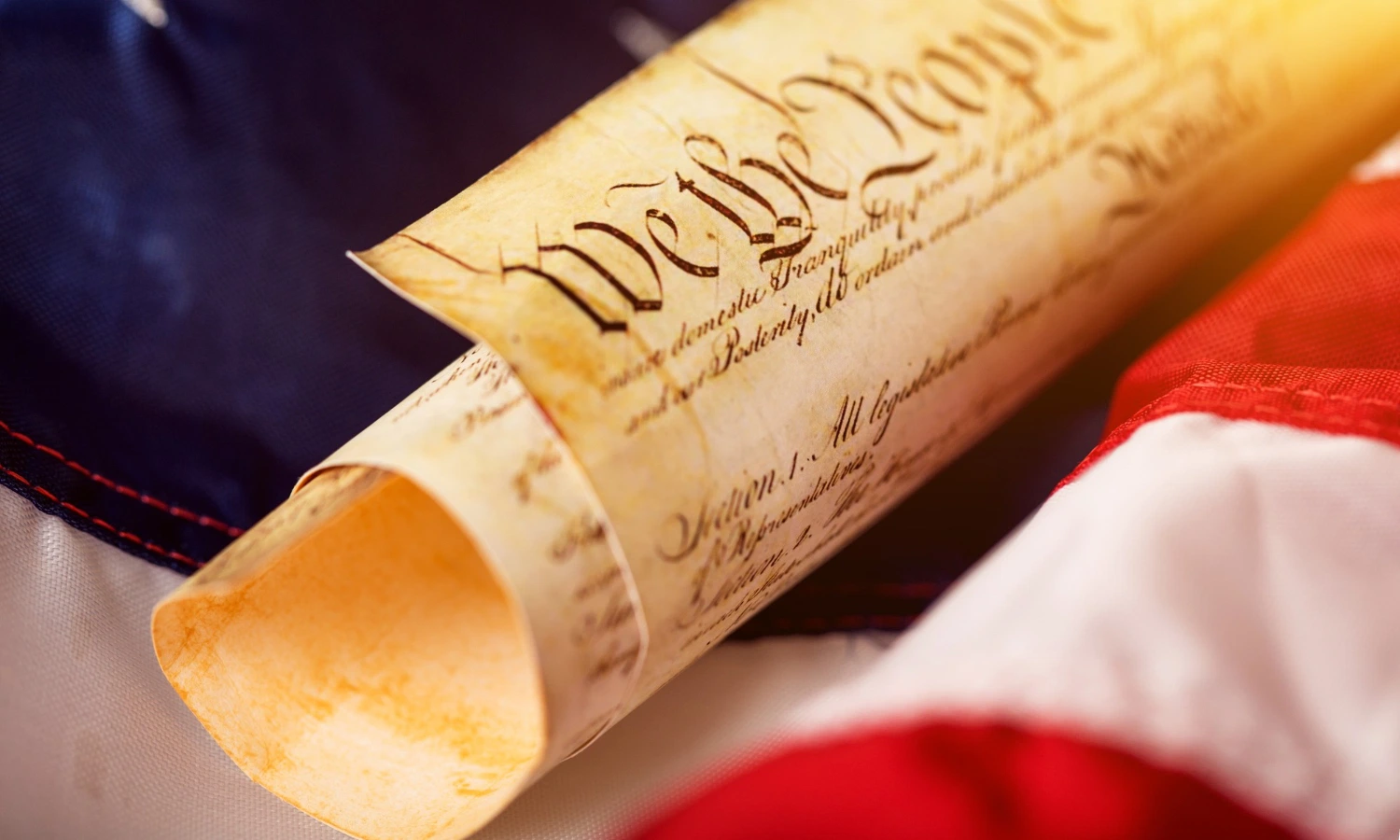
A constitution can be a single text or a body of laws, a combination of common-law traditions and constitutional conventions deemed by the participants to be obligatory. Thus, the answer to the question of what countries have a constitutional monarchy lies in legal documents and political realities, not in titles. Even if the crown embodies the highest sovereignty, effective authority may be held by a legislature, an executive branch and agencies vested with explicit powers and corresponding duties.
What Is A Constitutional Monarchy: Common Misreadings To Avoid
A common misconception is that a monarch is either all powerful or all powerless. A parliamentary constitutional monarchy generally occupies the space between these two extremes: the monarch may perform ritualized duties, whereas politicians are held responsible for governing. Although constitutional monarchs may possess reserve powers on paper, in political practice, constitutional norms, the will of the electorate and established institutional constraints are unlikely to allow a monarch to act unilaterally.
How Power Works In A Constitutional System
Generally, power rests with a prime minister and a cabinet that commands a majority in parliament. For example, in the United Kingdom, Parliament passes laws, the prime minister leads the executive branch and ministers are in charge of the various executive departments. While the ceremonial role of the Crown is preserved, political authority resides in elected and politically accountable officials.
Courts and constitutional rules also help in overseeing the administration. In different jurisdictions they could act as a mechanism for interpreting statutes, deciding on procedural disputes or enforcing the explicit constitutional constraints. It is a notable point that: while a bill may still need the royal assent to become law, the authority to propose, deliberate, enact and ratify it is given over to political institutions in most countries.
Duties Of The Monarch
The main tasks that remain for the head of state include electing a new prime minister (once elections have taken place or the makeup of parliament has shifted, but sometimes prior to general elections), convoking the parliament, signing laws into effect, greeting foreign leaders and acting as the country’s head of state on solemn occasions. These functions are normally performed in line with counsel or in accordance with constitutional practice. The King or Queen serves the purpose of formalising laws and providing continuity to the state by endorsing the choices of the politically elected governments, but not of formulating policy on the head of state’s own.
What Monarchs Usually Cannot Do
In the majority of constitutional monarchies the King or the Queen would lack the authority to make policy decisions, veto those made by the elected government, allocate the public treasury without approval from the parliament, or disregard the parliament. Exceptional powers may be retained, but the possibility is that the use thereof would be highly fraught with political risks. Any return to a de facto absolute monarchy would be less likely a product of the head of state’s ambition than of a breakdown or a dismantling of the constitutional checks on power.
History And Development Of Constitutional Rule
A gradual transformation, spanning centuries, took place, shifting from the autocratic rule of kings to the principle of constitutional law. In England, the Magna Carta served as an emblem of the notion that royal governance is subject to the rule of law, though such a concept did not truly gain traction in a modern democracy until later. Gradually as the system matured, authority over fiscal matters, lawmaking, ministerial accountability, and parliamentary monitoring were progressively shifted to the parliaments from the monarchs, thus undermining the kingship and buttressing representative systems.
This was not a template necessarily that all would strive to emulate. In Europe and Asia, constitutional royal bodies emerged in distinct nations via distinct constitutions, conflicts, reforms, occupations, and political accommodations. According to constitutional rule with royal office in the Encyclopaedia Britannica: constitutional monarchy “is a set of varying configurations, not one configuration”. In this way, it becomes more difficult to juxtapose the symbolical Japanese emperor with the more politicised Thai monarchy.

Constitutional Monarchy Examples Around The World
It is worth noting that some of the most widely-cited constitutional monarchy instances differ in nature from one another. The UK operates with a complex array of laws and conventions, the Japanese monarch is purely a figurehead as defined by the post-1945 Constitution, and the system in Thailand is a formal constitutional government with a monarchy that remains culturally and politically significant. These systems share the same label, but each one’s balance of political reality corresponds with a different set of traditions and institutional frameworks.
Although Wikipedia’s full account of constitutional monarchy lists a useful set of examples, the exact legal circumstances within each country must always be verified. Three key issues, who is in power, who creates law and whether the crown acts independently of ministerial direction, are far more telling than the pageantry of state, titles or newspaper headlines in determining how the system actually works.
United Kingdom
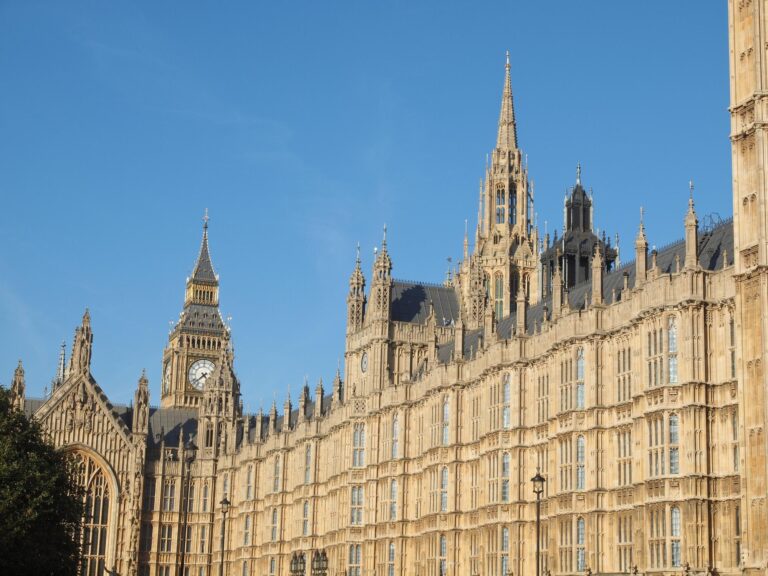
In the UK, King Charles III is a ceremonial head of state and the executive is governed by parliament and the prime minister. So queries such as “king of england power” are often confused by the terminology, because the role is not a personal executive office that acts independently. The monarch gives royal assent to bills, makes appointments, and makes official speeches in accordance with the conventions. A democracy in the United Kingdom works through the ballot box in elections, ministerial responsibility and through maintaining confidence in the government.
Japan
In Japan, the emperor is a much clearer symbol. Following the postwar constitution, he represents the country and the unity of its people, while politics is conducted by elected politicians. Law is made by the National Diet and the prime minister heads the government. The emperor’s activities are mainly ceremonial and official, but these functions take place according to the constitution, not at the emperor’s own political command.
Thailand
Thailand demonstrates why one needs to be very careful when using this expression. It is a constitutional monarchy in which the monarch has a monarchy that is very culturally and politically important, but whose recent political history is characterized by military coups, constitutional amendments and political conflicts. The role of the monarchy is not only ceremonial: it has been shaped by military intervention, political rivalries, legal limitations, and mass opinion.
Monarchy: When It Makes Sense
Why keep the crown? The answer is: because it makes a great deal of sense, if the citizens are willing to uphold the traditions of their country and allow the sovereign to remain nonpartisan with regard to elections. The rationale that the crown stands for the state rather than a particular political party has much appeal. But critics argue that hereditary leadership runs counter to the ideal that all citizens are equal, which brings the question of the legitimacy of the monarch’s constitutional powers: whether they can be persuaded of the authority of the monarchy and of the constitution.
Parliamentary Systems And Ceremonial Monarchs
In a constitutional monarchy , the monarchy is tied to a cabinet that is answerable to the legislature. According to International IDEA’s primer on constitutional monarchs in parliamentary democracies, constitutional monarchs are important as institutions that can bring continuity and stability to politics, and while elected representatives can provide political leadership, this can only happen within a stable political system, and requires customs to be followed and officials to be aware of the limits to their power.
Ceremonial monarchs continue to be relevant, given that there are often legal and political consequences to what may appear at first as merely ceremonial acts. For example, the opening of parliament, the appointment of government ministers and the granting of the royal assent all signify the changing of power in politics. The Constitutional Unit at University College London (UCL) describes the role of monarchs in Britain through constitutional practice and royal functions, and clarifies this distinction between ceremonial actions and personal influence. However, one thing to remember is that sometimes form can matter without meaning control.
Monarch Versus Prime Minister
The monarch is head of state, representing the unity and continuity of the country and fulfilling ceremonial duties. The prime minister is head of the government, leading the administration of government, directing policy, and holding a position that is politically responsible to parliament and to the electorate at large. One is head of state. The other is head of the government.
Quick Summary Of The Main Points
Here’s a simple rule of thumb: Monarchs rule, but they don’t reign. That’s the job of elections, legislation, and ministerial accountability, as well as a written constitutional document. A constitution, in other words. Monarchs sign things, award decorations and titles, give and receive guests, and embody their country’s image around the world. They do this, however, with varying degrees of power, which are determined by constitutional and traditional constraints.
In fact, be careful whenever you try to make comparisons between constitutional monarchies like the UK, Japan, or Thailand. Each one of these systems is different enough from the others that the term alone may mean very different things in each case, with the constitutional monarch acting as a simple ceremonial icon, as a mostly ceremonial head of state with powers that are largely dictated by custom or convention (“constitutional monarchy”), as a fully-fledged political system (“”). Study.com provides a nice classroom-style summary that lists some of the characteristics and examples of each system of government, but it does well to keep in mind that these distinctions do depend on a given country’s particular rules and constitutional provisions.
Frequently Asked Questions
This article responds to some of the FAQs you may have after you grasp the general concept: How is the leader selected? How is law enacted? What qualifies a country as a democracy? Which countries are democracies with kings? What is the difference between a king and an elected prime minister?
How Is A Constitutional Monarch Chosen?
Generally, a monarch is born into the office. The constitutional document says who has the right to the throne and in what order the members of the royal family inherit it. Whether the monarch’s powers are specified in a document or whether succession rules are simply defined by parliamentary tradition depends on each country. You need to consult national laws to determine what the specific process is to choose the monarch.
Can A Constitutional Monarch Refuse To Approve A Law?
Theoretically, a monarch has the right not to sign a bill into law. In practice, though, this is virtually unknown in modern politics because it could easily precipitate a constitutional crisis. The monarch’s assent to the legislation is a mere formality; it does not change the fact that the prime minister proposed the bill and the elected parliament approved it. The democratic safeguards operate in the parliamentary debates and proceedings, not the final step in the legislative process.
Is The United Kingdom A Democracy If It Has A King?
The UK is a democracy because the electorate elects the legislature, which elects a majority to govern, and ministers are subject to parliamentary accountability and public and political scrutiny. The king or queen acts as a head of state and performs a range of ceremonial and representative roles. It is the elected body and the government led by the prime minister who actually govern the country. A monarchy does not prevent a state from being a democracy.
What Countries Have A Constitutional Monarchy Today?
If you ask what countries have a constitutional monarchy, you find several examples: the United Kingdom, Japan, Thailand, Sweden, Norway, Denmark, Spain and the Netherlands. Each one is a little different. Some have constitutions that clearly limit monarchs. Others rely more heavily on conventions or customary practices that curb royal powers, but the rules may be enshrined in a constitution, law or political practice.
What Is The Difference Between A King And A Prime Minister?
If you wonder what is a monarchy government, the key distinction is that the king or queen holds the position through hereditary succession. In contrast, the prime minister holds the office on behalf of the elected government. The monarch serves as head of state, performs a range of ceremonial and representative functions and ensures continuity of government. The prime minister chairs meetings of the cabinet, sets the legislative and policy agenda and is politically responsible to the electorate.
Why Do Some Democracies Keep Monarchs?
When you ask what is a constitutional monarchy, a good way to think of this is to imagine that we’ve retained an unelected head of state in our democracy but we’ve constrained the monarch through the legal and political process. Some democracies retain their monarch because it is seen as having significant symbolic value for nation building or stability. Some monarchies also serve as a tourist attraction. But that doesn’t mean that all these governments operate as pure parliamentary systems, nor are they necessarily vulnerable to a reversion to absolute monarchy.
A constitutional monarchy keeps an inherited monarchy, but places it under a formal legal framework and alongside an elected legislature. The monarch represents the country and fulfills official roles on a daily basis. In a functioning democracy such as the UK, Japan and Thailand, however, the monarch has no say in the political decision-making process. It is the elected legislature, prime minister, and the cabinet that govern. The crown is preserved and the constitutional powers are retained. The test for how power is distributed in all cases is to determine who makes the final decision on the legislative process, the budget, staffing, judicial review, accountability and redress in each state.