 Call us now:

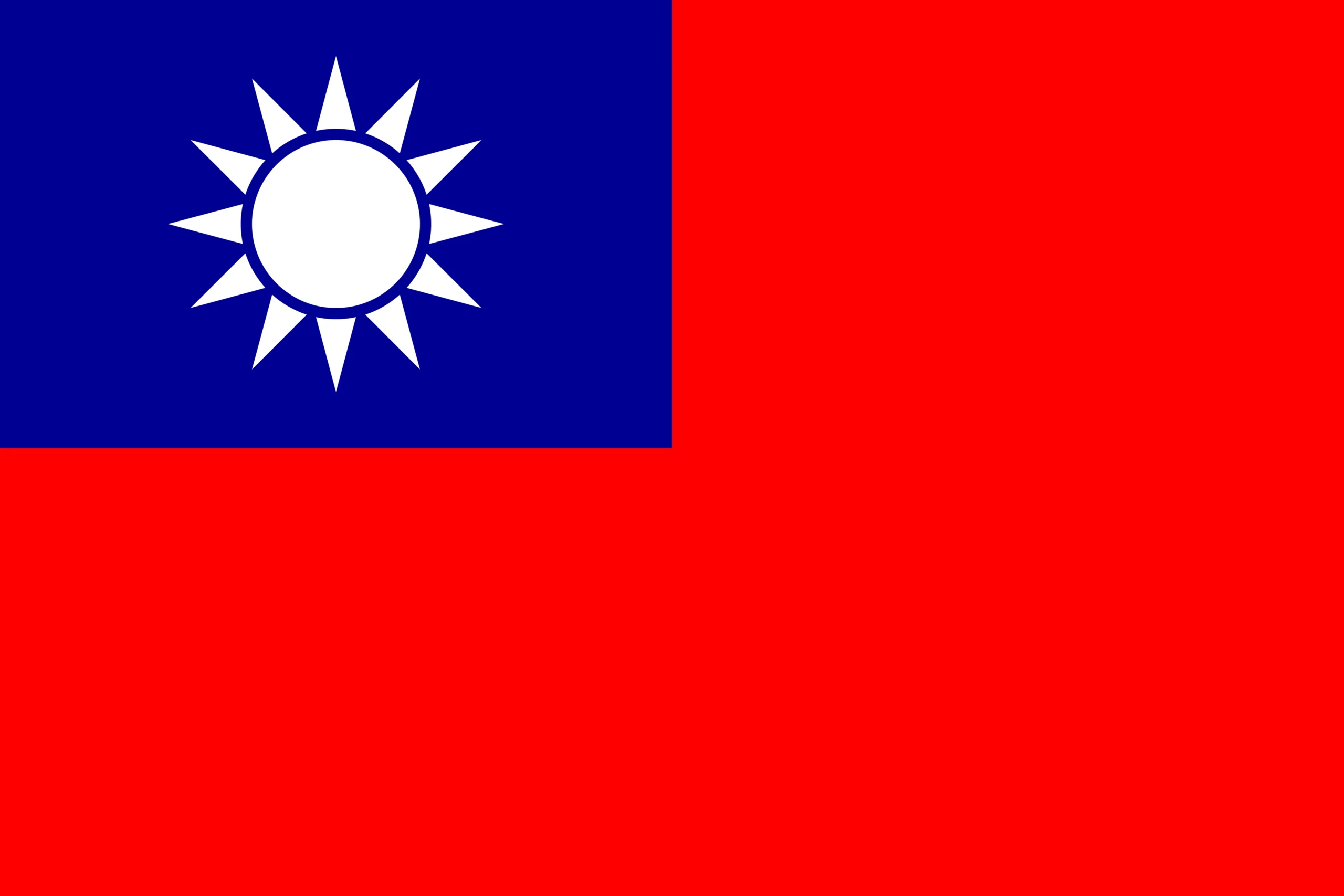
Taiwan democracy is one of the most significant political stories in modern Asia — and one of the least understood outside the region. A territory of 23 million people, officially known as the Republic of China, has developed a fully functioning liberal democracy complete with free elections, an independent judiciary, a vibrant free press, and competitive multiparty politics. It has accomplished this while operating under an ambiguous international legal status and facing sustained pressure from the People’s Republic of China, which claims Taiwan as its territory. Understanding how Taiwan’s democracy works, what makes it distinctive, and what threatens it is essential for anyone following the politics of the Indo-Pacific.
What Type of Government Does Taiwan Have?
Taiwan operates as a semi-presidential republic. The government structure combines elements of presidential and parliamentary systems — the President is directly elected by popular vote and holds significant executive authority, while the Executive Yuan (cabinet) is also accountable to the Legislative Yuan (parliament).
The President serves as head of state and commander-in-chief of the military. The Premier, appointed by the President, leads the Executive Yuan and oversees the day-to-day operations of the government. The Legislative Yuan has 113 seats, with members serving four-year terms. Taiwan also maintains a five-branch government structure inherited from Sun Yat-sen’s constitutional design, adding a Control Yuan (oversight), Examination Yuan (civil service), and Judicial Yuan to the three branches found in most Western democracies.
Is Taiwan a Democracy?
Yes, and by measurable standards, a strong one. Freedom House rates Taiwan as “Free,” giving it a score of 94 out of 100 in recent assessments — among the highest in Asia. Taiwan scores near-perfectly on political rights: its elections are competitive, its electoral commission operates independently, and transfers of power between parties have occurred multiple times without crisis.
The Economist Intelligence Unit’s Democracy Index classifies Taiwan as a “flawed democracy” due to concerns about executive-legislative relations and political culture — a classification that applies to most established democracies including the United States and Japan. By the substantive criteria that matter most — free elections, protection of civil liberties, rule of law, functioning independent institutions — Taiwan is unambiguously democratic.
Taiwan held its presidential election in January 2024, in which Lai Ching-te of the Democratic Progressive Party (DPP) won with roughly 40% of the vote in a three-way race. The election was conducted freely and fairly, with international observers praising the process. The result was accepted peacefully by all parties, including the losing candidates.
How Taiwan’s Democracy Developed
Taiwan’s democratic transition was gradual rather than revolutionary. For most of the twentieth century, the island was governed under authoritarian single-party rule by the Kuomintang (KMT), which fled the mainland following the Communist victory in the Chinese Civil War in 1949. Martial law was in effect from 1949 to 1987 — the longest period of continuous martial law in modern history at the time.
Democratic reforms began in the 1970s and accelerated through the 1980s. President Chiang Ching-kuo lifted martial law in 1987 and began a process of political liberalization. In 1991, emergency decrees from the civil war era were lifted. In 1996, Taiwan held its first direct presidential election — a historic milestone that triggered a tense standoff with China, which conducted military exercises in the Taiwan Strait in an attempt to intimidate voters. The election proceeded. Voter turnout was high.
This history matters for understanding Taiwan’s democratic identity. Democracy was not imposed from outside but developed through internal pressure, civic activism, and gradual institutional reform. The process is examined in depth alongside other democratic transitions in the history of voting rights in America — a useful comparative frame for understanding how franchise expansion shapes political culture over time.
Taiwan’s Political Parties and Political System
Taiwan has two dominant political forces and a competitive multiparty environment. The Democratic Progressive Party (DPP) generally favors a distinct Taiwanese identity and is more cautious about close integration with mainland China. The Kuomintang (KMT) has historically favored closer economic and political engagement with China while nominally maintaining the Republic of China’s constitutional claims.
The Taiwan People’s Party (TPP), founded in 2019 by former Taipei Mayor Ko Wen-je, emerged as a significant third force, particularly among younger voters. The 2024 election saw the TPP win enough legislative seats to make it a kingmaker in the divided legislature, complicating governance for the DPP-led executive.
Taiwan’s political debates are not simply about China policy, though that question underlies nearly everything. Domestic issues — housing costs, energy policy, wages, social insurance — dominate much of the legislative agenda. Taiwan’s political system generates genuine policy disagreement and genuine electoral competition, which is the basic functional definition of democracy in practice.
Taiwan’s Democratic Institutions
Taiwan’s electoral system uses a mixed-member system for the Legislative Yuan: 73 seats elected from single-member districts, 34 seats from party lists, and 6 reserved for indigenous communities. The two-vote structure — one for a local candidate, one for a party — allows voters to split their choices and has contributed to the legislature reflecting a broader range of political opinion than the presidency alone would suggest.
The Central Election Commission is an independent body responsible for administering elections at all levels. It has a strong record of procedural integrity and has not been a significant source of political controversy. Taiwan’s elections have been called among the most transparent in Asia by international election monitoring organizations.
Is Taiwan an Independent Country?
This is the most complicated question surrounding Taiwan, and it has both a factual and a political answer. Factually, Taiwan operates as a de facto independent state: it has its own government, military, currency, passport, foreign policy, and legal system. It exercises full sovereignty over the territory it controls.
Politically, the question is deliberately left ambiguous. Most countries — including the United States — do not formally recognize Taiwan as an independent country under international law, maintaining instead unofficial relations governed by frameworks like the Taiwan Relations Act. China insists Taiwan is a province of the People’s Republic of China and has not renounced the use of force to achieve unification. Taiwan’s official constitutional position identifies it as the Republic of China — a government with claims to mainland China that are not practically exercised but remain formally on the books.
For comparative context, examining China’s political system provides a direct contrast: two Chinese-speaking societies, operating under fundamentally different governmental systems, with radically different records on political rights and civil liberties. That contrast is itself a significant geopolitical argument about what kind of society Taiwan represents.
Civil Liberties and Freedom in Taiwan
Taiwan scores near the top in Asia on civil liberties measures. Press freedom is among the strongest in the region, with a competitive media environment and no government censorship of political content. Internet freedom is high — Taiwan has no equivalent of China’s Great Firewall, and Taiwanese citizens access the full global internet freely.
Taiwan legalized same-sex marriage in 2019, becoming the first territory in Asia to do so through a judicial ruling. The process involved significant public debate and demonstrated that Taiwan’s democratic institutions can handle contentious social questions through legal and political processes rather than repression.
Freedom of assembly and freedom of expression are protected and exercised routinely. Political rallies are common, protest is legal and frequent, and criticism of government officials and policies is a standard feature of public discourse. These are not trivial observations in a regional context where several neighboring states treat these activities as threats to stability.
Why Taiwan’s Democracy Matters Geopolitically
Taiwan’s democratic status is not merely a domestic political fact — it is a geopolitical argument. China’s position is that Taiwan’s government is illegitimate and that unification, however eventually achieved, is inevitable. Taiwan’s democracy complicates that argument: a population that has built robust self-governance over three decades and holds regular elections cannot be straightforwardly absorbed into an authoritarian system without confronting the preferences of 23 million people.
The question of Taiwan’s future is one of the most consequential in global politics. Any conflict in the Taiwan Strait would affect global semiconductor supply chains, regional security alliances, and the credibility of international commitments to democratic governance. For those interested in how democratic institutions fare under existential pressure, the documentary All In: The Fight for Democracy provides broader context on what is at stake when democratic systems are challenged by more powerful adversaries.
Taiwan’s democracy demonstrates that East Asian societies are fully capable of building and sustaining liberal democratic institutions — a point that carries weight in ongoing debates about whether democracy is culturally specific or universally achievable. That demonstration, conducted under sustained external pressure and international ambiguity, is itself one of the most significant political achievements of the late twentieth and early twenty-first centuries.