 Call us now:

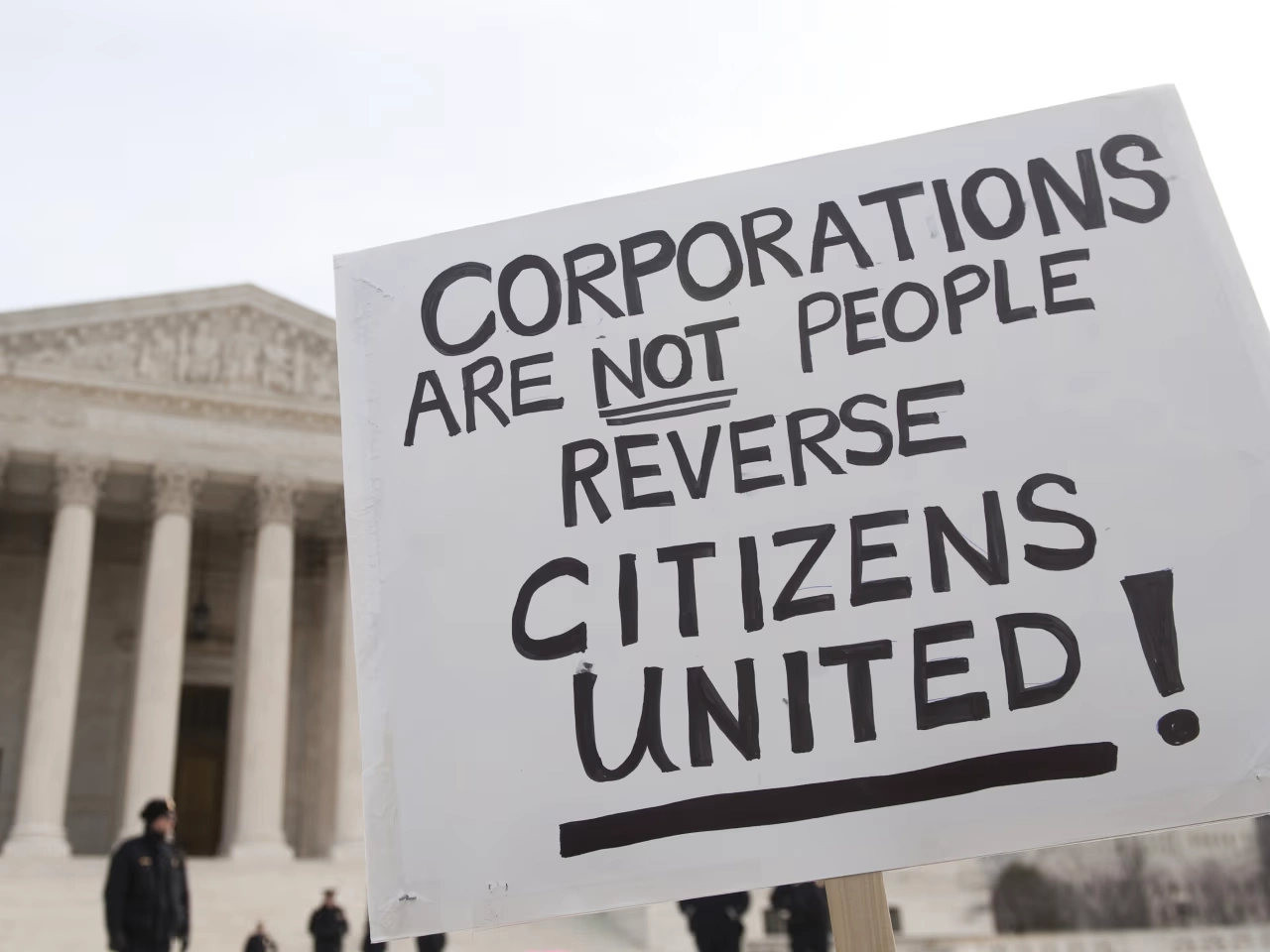
Citizens United v. Federal Election Commission is among the most consequential and most contested Supreme Court decisions of the twenty-first century. Decided in January 2010, the ruling struck down restrictions on political spending by corporations, unions, and other organizations, holding that such spending constitutes constitutionally protected free speech. Critics argue it opened the floodgates for unlimited money to enter American politics, distorting elections in favor of wealthy interests. Supporters contend it correctly recognized that political speech does not lose its constitutional protection because it comes from a corporation rather than an individual. Understanding what the case actually decided — and what it did not — is essential for anyone trying to make sense of modern American campaign finance.
What Is Citizens United?
Citizens United is the name of a conservative nonprofit organization that produced a documentary critical of Hillary Clinton during the 2008 presidential primary season. The organization wanted to air the film and associated advertising within 30 days of a primary election. Federal law at the time — specifically provisions of the Bipartisan Campaign Reform Act of 2002, also known as McCain-Feingold — prohibited corporations and unions from using general treasury funds for “electioneering communications” during the 30 days before a primary or 60 days before a general election.
The Federal Election Commission ruled that the film and its advertising fell under these restrictions. Citizens United challenged the ruling. The case reached the Supreme Court, which not only decided the specific question of the film but used the case to address broader constitutional questions about corporate political spending.
The Court’s 5-4 decision held that the government cannot restrict independent expenditures for political communications by corporations, associations, or labor unions. The majority, written by Justice Anthony Kennedy, concluded that political speech does not lose its First Amendment protection simply because its source is a corporation rather than an individual.
What Did Citizens United v. FEC Actually Change?
Before Citizens United, corporations and unions could not spend general treasury funds on independent expenditures expressly advocating for or against a candidate’s election. They could contribute to PACs (political action committees), which operated under separate rules, but direct corporate and union treasury spending on political advertising was prohibited.
After Citizens United, corporations, unions, nonprofits, and other organizations could spend unlimited amounts from their general treasuries on independent expenditures — political spending not coordinated with candidates or parties. This opened the door to what became known as Super PACs: organizations that raise unlimited funds from corporations, unions, and wealthy individuals and spend those funds on political advertising without contribution limits.
The ruling did not eliminate all campaign finance restrictions. It did not permit direct contributions from corporations to candidates, which remain prohibited. It did not permit coordination between outside spending groups and campaigns. Disclosure requirements for some types of spending remained in place, though their scope and enforcement have been subjects of subsequent litigation.
The Impact of Citizens United on Political Spending
The practical impact of Citizens United on political spending has been substantial and measurable. Outside spending in federal elections increased dramatically following the 2010 ruling.
| Election Cycle | Outside Spending (Approx.) |
|---|---|
| 2008 (pre-ruling) | $338 million |
| 2010 | $570 million |
| 2012 | $1 billion |
| 2020 | $3.4 billion |
| 2024 | $4.5+ billion |
These figures reflect total outside spending — money spent by groups other than the candidates and parties themselves. The trend is not entirely attributable to Citizens United alone; other rulings and regulatory changes contributed. But Citizens United created the legal architecture that makes this level of spending constitutionally permissible.
Dark money — spending by nonprofits that are not required to disclose their donors — also increased significantly. 501(c)(4) “social welfare” organizations can engage in political activity as long as it is not their “primary purpose.” This threshold is loosely defined and loosely enforced, allowing organizations to spend significant amounts on politics while keeping their donors anonymous.
Why Is Citizens United Bad, According to Critics?
Critics argue the ruling fundamentally distorted the relationship between money and political power in American democracy. The core objection is that allowing unlimited corporate and union spending gives wealthy interests a structural advantage in political communication that ordinary citizens cannot match.
When a corporation or wealthy individual can spend $100 million on political advertising in a single election cycle, they command a share of the political communication environment that far exceeds their share of the electorate. Critics argue this creates a system where politicians are effectively accountable to large donors as much as or more than to ordinary voters, because the resources needed to run competitive campaigns are disproportionately concentrated among the wealthy.
The ruling’s impact on the perception of government legitimacy matters independently of its direct policy effects. Polls consistently show that large majorities of Americans believe money has too much influence in politics. Citizens United accelerated the trends producing that perception, which contributes to cynicism about democratic participation. Whether celebrities who campaign for candidates exercise more or less legitimate political influence than anonymous corporate donors is itself a useful framing for thinking about what kinds of electoral influence democratic systems should tolerate.
Why Do Supporters Defend Citizens United?
Supporters of the ruling start from the principle that political speech — including spending money to disseminate political speech — is constitutionally protected regardless of whether the speaker is an individual or an organization. The First Amendment, they argue, does not create different tiers of constitutional protection based on who is speaking.
They point out that Citizens United protects the speech of labor unions, nonprofits, and advocacy organizations as much as corporations. Civil liberties and issue advocacy organizations that might normally be considered politically progressive also benefit from the ruling’s protection of organizational political speech.
Supporters also contend that money in politics is not inherently corrupting — that it is a vehicle for political communication, and that restricting political communication in the name of preventing corruption risks becoming government censorship of political content based on the identity of the speaker.
Citizens United and New Democracies
The Citizens United framework is distinctly American. Most other democracies impose stricter limits on political spending, including limits on the total amount that can be spent in elections, stricter disclosure requirements, and prohibitions on corporate political spending that would be unconstitutional under Citizens United’s First Amendment framework.
Understanding why the ruling is so consequential for American politics specifically requires recognizing how it interacts with other features of the American system — the cost of media in a large country, the absence of public campaign financing for federal races, and the Federal Election Commission’s limited enforcement capacity. In countries with public campaign financing and free broadcast media allocations, the dynamics that Citizens United created would be significantly different. For context on how democratic transitions in Kosovo handle campaign finance in a very different institutional environment, the contrast is instructive.
Can Citizens United Be Overturned?
Citizens United could theoretically be overturned in several ways. A future Supreme Court with a different majority could reverse the ruling in a subsequent case — this is how the Court has overruled past precedents, including Roe v. Wade. A constitutional amendment explicitly authorizing campaign finance regulation could override the First Amendment as interpreted by Citizens United. Congress could pass legislation restructuring campaign finance in ways that do not conflict with the ruling’s holdings.
None of these paths is currently straightforward. Overruling Citizens United would require either a significant change in the Court’s composition and jurisprudential approach or a subsequent case that distinguished the ruling narrowly enough to restore meaningful spending limits without formally overruling it. Constitutional amendments require two-thirds supermajorities in Congress and ratification by three-quarters of states — a threshold that makes them rare in practice.
The Voting Rights Act of 1965 offers a historical example of landmark legislation that has required sustained political effort to preserve and extend — a parallel for the kind of sustained political engagement that campaign finance reform would require.
Citizens United remains the governing framework for American campaign finance law. Its effects on the volume of political spending and the role of undisclosed money in elections are not hypothetical — they are measurable and have intensified with each subsequent election cycle. Whether those effects are acceptable as the price of constitutional free speech protection or harmful to democratic equality is the central dispute the ruling created and has not resolved.