 Call us now:

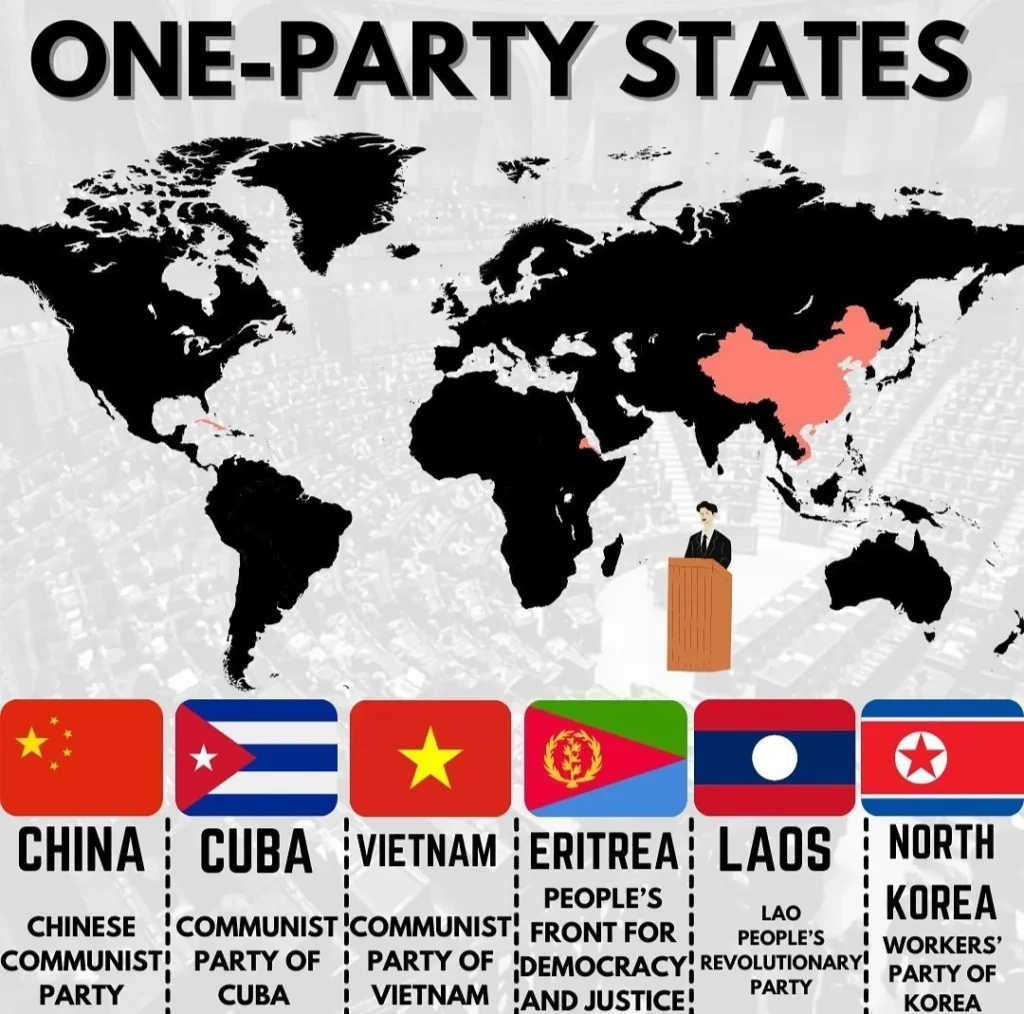
A one-party state is a state in which one party exercises public power in the state, by law or by effectively excluding any effective challenge to that party. The issue here is not that there are no elections, but that there can be no election in which the electorate chooses to replace the ruling party with a different party. In state politics in the U.S. “one party state” usually refers to unified party government, but that’s not a formal one-party state. The distinction has implications for civil rights, policy, and elections.
In This Article
- What A One-Party State Means In Practice
- Where Single Party State Control Appears In U.S. Politics
- How Unified Party Control Shapes Policy
- Election Outcomes That Change Party Control
- Examples Of Power Dynamics Under One-Party Rule
- Common Misunderstandings About One-Party Government
- Key takeaways
- Frequently asked questions
- Conclusion
What A One-Party State Means In Practice
one party system is a system where one political party is the only party that can nominate candidates to stand for election and exercise power. Other parties might exist, but they cannot participate in national elections or form a government. Opposition parties might not be illegal; they may take part in local elections and debate on policy, but they are unlikely to hold any positions at a national level.
However, not every one-party state is the same. Some one-party states allow some political freedoms and debate; others are highly repressive and do not permit any opposition at all. But what they all have in common is the position of the single party in the government. In a one-party state, the single party is the government. The single party might win election after election; however, in a one-party state, the party wins because it is the only party that can legally exercise power.
How A Single Party State Differs From A Dominant-Party System
one party system is defined by a system where the political system is such that power does not shift between parties. In a dominant-party system, other parties may still exist, organize, hold elections, win seats and govern. Other parties might compete for the right to rule in a multi-party system. The ruling party might continue to rule by continuing to win elections in a multi-party democracy. The ruling party might continue to rule because it is popular, has more money, has better candidates, is gerrymandered, is favored by the circumstances, is defeated by less competent opposition, or because the voters are loyal to it.
Where Single Party State Control Appears In U.S. Politics
Looking at state governments in our country, the idea of single party state is rarely applied in a formal way. Elections remain competitive, and a Republican or Democratic majority could be overturned if it loses too many seats. We generally call “state trifectas” when one party controls the governorship and both chambers of the state legislature.
The party that controls the governorship and the state legislature has a lot of sway over policy because it can pass laws without the need to compromise with the other side. Of course, a state trifecta is limited by the state constitution, federal laws, court decisions, and the next election cycle. What does this mean for you? It just means that a party has more power to govern rather than being unable to contest other parties.
Party Trifectas Versus Divided Government
A single party means outlawing other political parties, whereas a state trifecta means controlling all branches of government.
Party trifectas and divided government at the state level
| Government type | Best suited for | Benefits to policy-making | Downsides and restrictions |
|---|---|---|---|
| Party trifecta | Passing a unified agenda after an electoral victory | One party controls the governorship and both chambers of the legislature; budget and priority bills can pass more quickly | Still subject to state constitution, courts, federal law, veto override process, and future elections |
| Divided government | Requiring bipartisanship and gradualism | Bills need to pass with broad support; oversight hearings and amendments are more frequent | Budget deadlines, appointments, and vital legislation may be stalled or weakened |
| One-party state | Defining a one-party system legally | Ruling party could block meaningful electoral competition by lawful or unlawful methods | Distinct from a U.S. trifecta; no real multi-party elections or viable opposition |
| Supermajority trifecta | Overcoming vetoes or reaching initiatives to the ballot box | Ruling party might attain specific majorities, such as 2/3rds, to overcome vetoes or put initiatives up for constitutional amendment | Dissent within the ruling party and the courts may still block laws; rules regarding state thresholds differ |
| Narrow trifecta | Momentary control of the legislature with a thin margin | Legislators can set the legislative calendar and organize among party members | A single legislator can block a bill; special elections could shift the majority |
| Divided legislature | Determining which chamber is in control | One chamber may check the other; joint committees write final versions of bills | Bills may stall in committee regardless of the governor’s wishes |
The table explains party trifectas, divided government, one-party states, supermajority trifectas, narrow trifectas, and divided legislatures based on their advantages, disadvantages, and typical situations.
Why “One-Party Rule” Is Often Used For State Trifectas
This terminology is used because it conveys the extent to which a party wields political power in plain words. When one party holds the governorship and both state legislative chambers, elections can hasten decisions on taxes, education, abortion, labor, voting, and the environment. But remember that states maintain competitive elections, independent institutions, and are subject to judicial decisions and constitutional constraints. So they are not comparable to authoritarian one-party regimes.
How Unified Party Control Shapes Policy
But what about the policy outcomes of unified party control? There are a few ways in which that might happen. For one, it will determine which bills are brought to the floor. Party leadership controls which bills are taken up. Committee leadership decides which issues get debated. Governors may choose to work with their own party majority rather than use the veto as a way of bargaining with the minority. And this primarily impacts fiscal policy, tax policy, deregulation, and other social policy.
Faster decisions don’t always lead to better, or even equivalent, legislation. Faster decisions reduce the possibility of gridlock, but they can also reduce the influence of the minority party. Unified party control gives us a better idea of who should be held accountable for the outcome. The pace at which policies are implemented depends on multiple factors, including party discipline, caucus cohesion, public pressure, and the potential role of the courts or the ballot initiative.
Taxes, Spending, And Budget Negotiations
In fiscal policy, the party that controls the majority of the chamber could have a greater say over how the money is spent. That includes revenue generation, tax exemptions, tax credits, spending priorities, and the state debt. A majority of one party can approve a budget in line with their party platform rather than a divided chamber, because they have less incentive to make compromises with the opposing party. In a divided chamber, it can take longer for policy to change, or for a policy to be passed, or the minority party can influence the decision.
Social Policy And Regulatory Priorities
Public policy on education, health care, business regulation, or criminal justice might change, depending on whether one party controls both the legislature and the governor’s office. It would be less likely that the party coalition will fracture. The legislature could approve a package that includes changes to education standards, education funding, and parental notification all at once. The same would be true for occupational licensing, environmental regulation, Medicaid expansion, or labor law.
Checks That Still Limit A Trifecta
Courts can strike down the legislation as unconstitutional under either state or federal law, even if a supermajority voted for the bill. Citizens may vote on the legislation by using the ballot initiative in certain states. State laws can be preempted by federal laws. That’s my point. One-party control doesn’t give the majority party an unlimited ability to enact laws.
Election Outcomes That Change Party Control
Whether or not there’s a unified government usually boils down to one or two races. One governor race might leave you with divided government despite a party controlling both chambers. One chamber shift can turn a trifecta into a divided legislature even if the governor was re-elected. Special elections can be critical, particularly in states where the majority margin is razor thin and the legislature is split narrowly.
If Bill Kramer were a state politics analyst instead of a political pundit, he’d be the sort of analyst who tracked all of these elements: governors, statehouses, state senates, and whether any of those seats are up due to vacancies or open seats. Those factors too are time-sensitive. Before accepting any current control map as gospel truth, look for updated certifications, any new vacancies, party changes, court-ordered redraws, and any outstanding recounts.
Why The November 2023 Elections Mattered
The 2023 off-year elections are interesting, in that they’re capable of shifting power at the state level when voters aren’t focused as much on the presidential contest. Decisions made on governors, chambers, and ballot measures in those contests can shape state policy for years, long before the next presidential election. And here’s where it gets interesting: Even a relatively low-turnout election can determine questions of taxation, reproductive rights, public education, energy permits, and labor law, affecting tens of millions of citizens.
What To Watch In The Next Election Cycle
Start with narrowly decided chambers, move to the statehouse, and finish with ballot measures that could potentially change existing statutes. Some states seem to be in a lull until certain districts become competitive due to redistricting, retirement, scandal, or anger. The existing state of power isn’t set in stone; it’s just one snapshot, and another election cycle might result in entirely different legislation and vetoes.
Examples Of Power Dynamics Under One-Party Rule
In a formal one-party state, the power flows from the top down, with party officials as gatekeepers. Candidate nominations, parliamentary deliberation, promotion of government services, and news reporting are all dependent on their consent. Public posts may be open to contestation, but they will likely operate within the context of a party state.
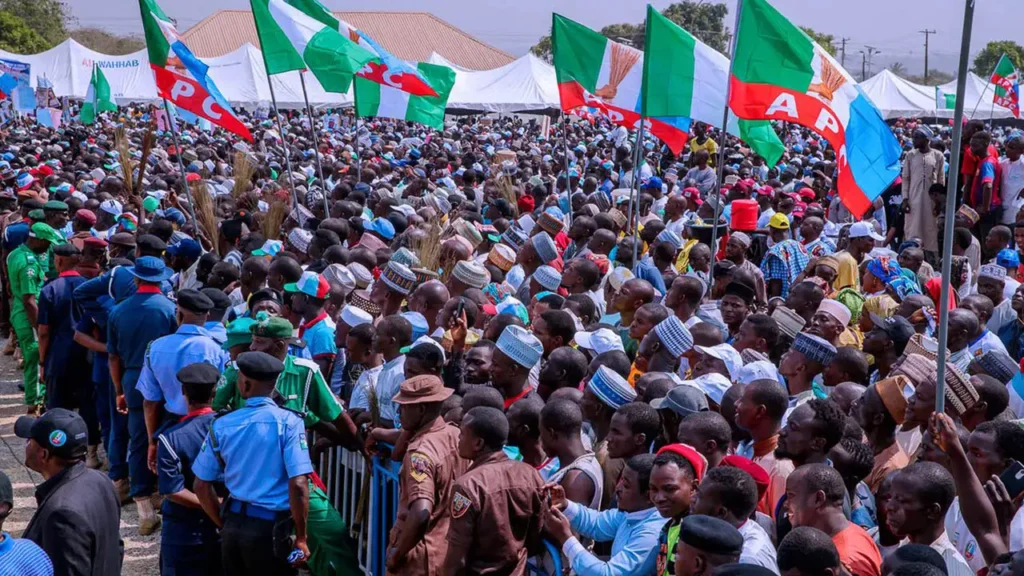
In state trifectas in the U.S., the institutional structure is very different. Party officials and legislative caucuses have influence, but there are still minority legislators holding office, public criticism is still legal, and the majority can be voted out in the next election. Minority legislators still wield some influence in committee appointments, amendments, and appropriation debates. It’s not a lack of centralized power that sets the difference, but rather the existence of peaceful succession.
Common Misunderstandings About One-Party Government
A lot of the common misconceptions are rooted in misunderstanding the difference between political science and journalism on the topic of unified government.
- Voters don’t always make a meaningful choice between parties and candidates.
- A U.S. trifecta isn’t tantamount to dictatorship, as citizens can vote out their leaders.
- Dominant party governments may or may not be entirely just, but one should question the legitimacy of situations where parties are banned through the legal system, through the media or through violence.
- The existence of one-party control over the executive branch does not equal unified government; legislative chambers are still needed to pass laws.
- The judiciary and election procedures allow the minority to oppose a majority, so even full political control won’t ensure policy success.
Key takeaways
The term one-party state is usually intended to indicate that a party has government in either the de jure or de facto sense. In American politics the term “one-party rule” is instead meant to refer to a state-level trifecta rather than a one-party state. Trifectas tend to make for faster policy change because they involve fewer institutional veto players. Whether a state-level trifecta survives depends upon election results for the governorship and legislature. A thorough article should explain this difference between the academic term and US usage.
Frequently asked questions
Can a country with only one legal party still hold elections?
Elections can happen in a one-party state, but if the people voting can’t elect a different party, there is no actual competition. Some countries let voters pick from a list of government-approved candidates for a state-run election. A student site says in a one-party state, “Any citizen who is 21 years old or older can be chosen to run as a candidate for the election and is then approved by the state.”
Is one-party control always authoritarian?
A government that controls all three branches doesn’t mean a dictatorship. There are many versions of a one-party state regime. One type is when one party has a legal monopoly on political power. Another is when one party is the only one that has won an election. Another is when one party has temporarily held absolute control over the organs of a democracy. One-party status is determined by whether other parties can compete in elections and become elected to power. What makes a system a one-party state is the existence of democratic processes and rights.
What is the difference between a state trifecta and a one-party system?
State trifectas happen when one party controls the governorship and the state’s two houses of the legislature, while a one-party system is when one party prevents other parties from having a real chance at governing. State trifectas can change after an election, while single-party systems have barriers built-in to prevent rotation of power.
How does unified party control affect lawmaking speed?
Unified governments often mean faster passage of legislation, since there are fewer chances for the minority to delay the majority party’s legislative agenda. If the majority party holds the majority of seats in both houses of the state legislature and the governorship, a bill can easily be introduced, passed by the legislature, and signed into law by the governor, especially if the governor and leaders of both chambers agree on the issue. However, the speed of a bill can also depend on party discipline, the calendar, public opinion, and legal limitations.
Which parts of government matter most in determining party control?
All three must be held by the same party because only together can they enact and sign standard bills. While courts aren’t part of a state trifecta, they can restrict it. Popular initiative and referendum also are not part of a state trifecta, but they can limit the effectiveness of a government’s policy-making goals.
Why do off-year elections matter for state policy?
Midterm elections are particularly relevant because they contain races for governor and state legislature, as well as direct-vote propositions. Midterms usually get less media attention than presidential elections, but they affect state government as well. Changing one of the state legislature houses or the governor’s office can dramatically change the course of a state’s budget, education, health care, and criminal justice policies. It is a good idea for voters to research state party control after every election.
Conclusion
A one-party state is a situation in which one party is the government. You’ll sometimes see this in US reporting, called a trifecta. That context, it’s a slightly different meaning: it is not a one-party system, it is a situation where the Democrats or Republicans control the state legislature and the governor. That is a difference, because single-party systems ban or restrict opposition parties and so meaningful electoral competition. In the US, a one-party trifecta is when the people have elected a governor and legislature of one party. But in both cases, the concentration of power is what matters. It changes the incentives for lawmakers, it can facilitate change in policy, it makes elections that can keep or remove that concentration more important. So the most correct way to use the term is to ask: Is there any meaningful competition? Does one party control the governor and legislature? Is there any check on that party?