Call us now:

What is parliament? Parliament is the institution where representatives can turn a minister’s plans into law, demand explanations for government decisions, or refuse the money needed to carry them out. Its authority comes from the country’s constitutional arrangements, which determine whose approval the government needs.
That clash between proposing and approving runs through parliamentary life. A minister wants to act; members want answers, changes, or a different policy altogether. This article follows that contest through Parliament’s development, its chambers, and its powers, using Britain as the main example. The thread is practical: who wants a decision, whose agreement matters, and how can the public influence the outcome?
In This Article
- How Parliament Developed
- How Parliament Differs From Government
- How Parliamentary Chambers Are Organized
- How Parliament Makes Laws
- How Parliament Checks Ministers and Public Spending
- What Parliamentary Sovereignty Means in Britain
- How People Influence Parliament and Its Reform
- Key Takeaways
- Frequently Asked Questions
- Recognize Parliament’s Role in Public Life
How Parliament Developed
In 1295, representatives of English counties and boroughs gathered at Westminster alongside nobles and churchmen. Edward I needed financial support for his wars. Summoning people who could consent to taxation brought the Crown’s need for money into direct contact with the people expected to provide it. The meeting later known as the Model Parliament illustrates a pressure that helped Parliament grow: royal ambition required resources, and obtaining resources required negotiation.
That negotiation had older roots. Parliament developed from royal councils through which English monarchs sought advice and support from powerful subjects. Its name comes from the French parler, meaning “to speak.” Simon de Montfort’s Parliament in 1265 had already brought county and town representatives together with nobles and churchmen. The importance of these gatherings lay in who entered the discussion: decisions increasingly involved people beyond the monarch’s immediate advisers.
Different groups eventually met separately, producing the division between Commons and Lords. Their authority grew through conflict as well as consultation. The seventeenth-century struggles over royal government strengthened Parliament’s position, and the Bill of Rights of 1689 helped protect parliamentary activity against royal interference. Asking a ruler for concessions had developed into asserting limits on the ruler’s power.
Power over the ruler still left a question: who could choose the representatives exercising it? Voting rights remained restricted. The Reform Act of 1832 changed representation and widened the electorate; later reforms carried that process further. Women gained parliamentary voting rights on limited terms in 1918 and equal voting terms with men in 1928. Parliament’s development therefore involved a second struggle alongside its contest with the Crown: the public’s struggle to gain a voice within Parliament itself.
How Parliament Differs From Government
On 19 January 2022, Conservative backbencher David Davis confronted Prime Minister Boris Johnson during Prime Minister’s Questions. Addressing the leader of his own party, Davis ended with the demand: “In the name of God, go.” A government supporter had used his place in the Commons to challenge the person running the government.
Davis’s intervention exposes the distinction between the two institutions. Government is the executive: the prime minister and ministers develop policy and direct departments responsible for administering public services. Parliament is where members examine proposals and challenge the people carrying them out. In parliamentary government, the executive normally depends on the confidence of the elected chamber. The people defending ministers today may help force them out tomorrow.
British ministers normally sit in either the Commons or the Lords, with the prime minister sitting in the Commons. This places them inside the institution that questions them. Cabinet ministers answer for departments and major policy areas; backbenchers can press them on the consequences. An opposition MP might demand an explanation for a delayed service, while a governing-party MP might seek a change that ministers would prefer to avoid.
Most members hold no ministerial office. Their leverage comes through parliamentary work: questioning ministers, proposing amendments, or pursuing constituents’ problems. Party loyalty shapes how they use that leverage, especially when a close vote threatens the government’s program.
The stakes rise when confidence itself is at issue. A government unable to maintain the Commons’ confidence may have to resign, or an election may follow under the applicable constitutional arrangements. Defeat on an ordinary vote does not automatically bring that result; the character and circumstances of the vote matter. The US president, by contrast, holds office independently of maintaining Congress’s confidence.
How Parliamentary Chambers Are Organized
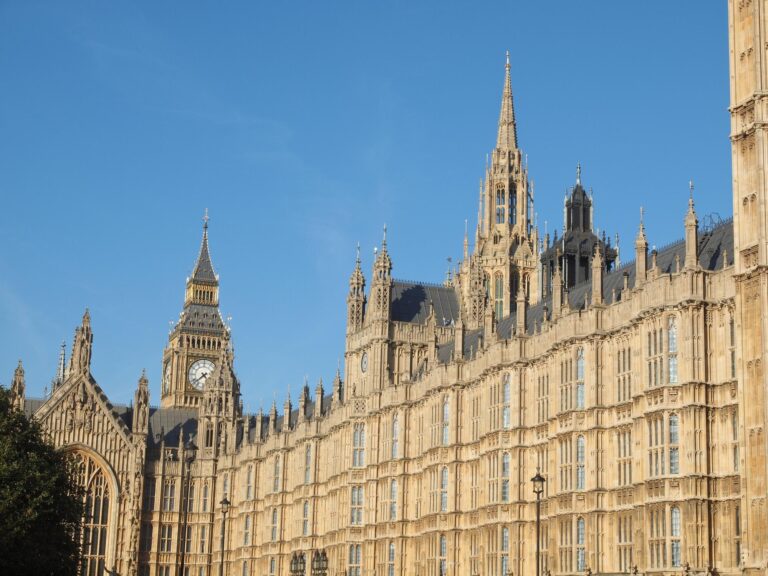
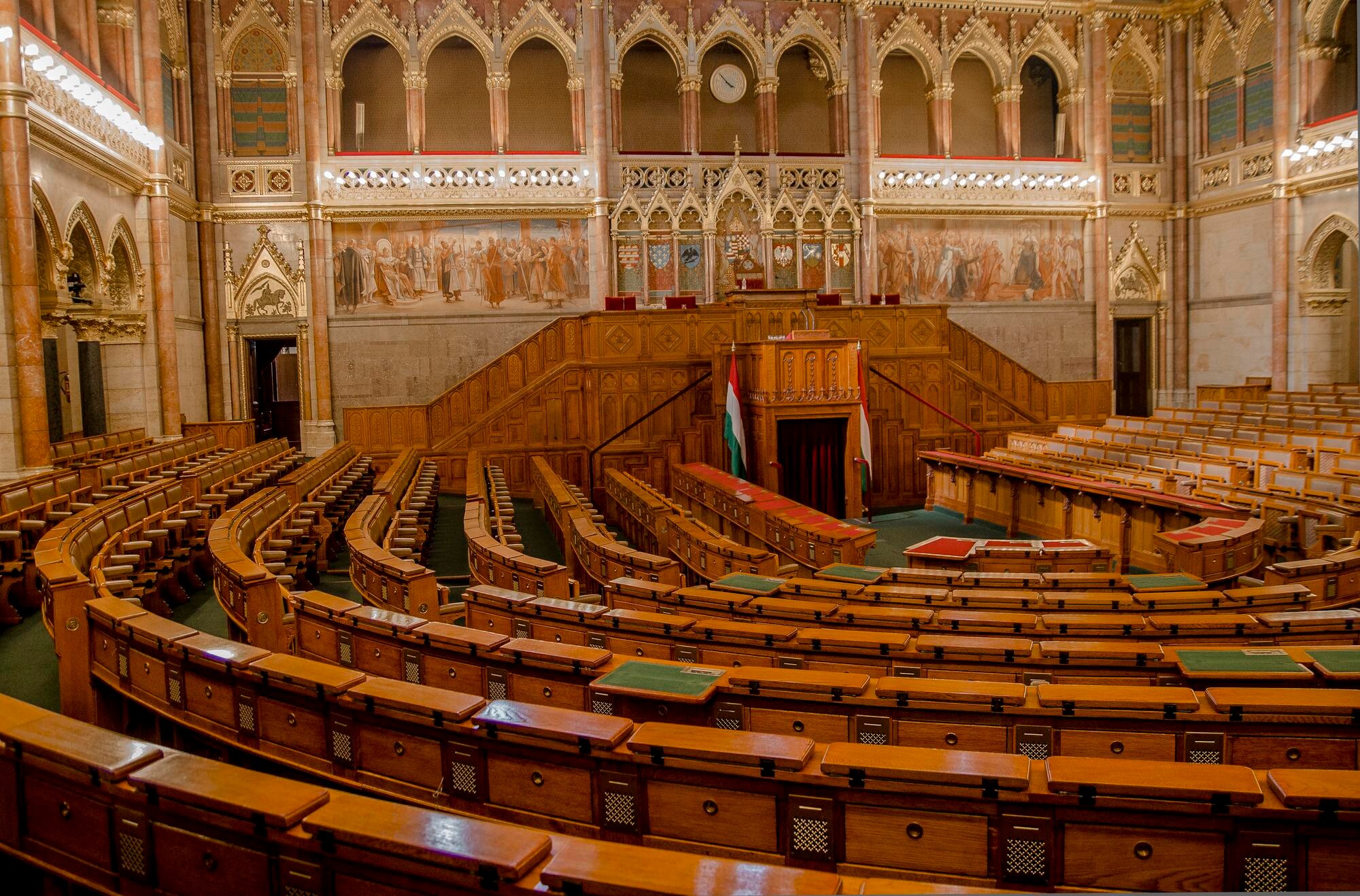
The UK Parliament meets at the Palace of Westminster in London and consists of the Commons, the Lords, and the Crown. The Commons has 650 MPs, each representing a constituency. Voters choose an MP at a general election or, if a seat becomes vacant between general elections, a by-election. Those constituency contests give the chamber its direct electoral mandate.
The Lords brings a different basis of membership into the same institution. Most members are appointed life peers, and some Church of England bishops also sit there. Tanni Grey-Thompson, the former Paralympic athlete who became a life peer in 2010, provides a concrete example of experience brought into the chamber through appointment. Such appointments can supply knowledge of public life while leaving an argument about who gets to choose the lawmakers.
That argument matters because the Lords does legislative work. It examines bills and asks the Commons to reconsider provisions. The Commons retains political primacy, including the decisive relationship with the government’s confidence, while the Lords’ power to block legislation is limited. The Crown has a constitutional place in Parliament; the monarch does not join ordinary parliamentary debates as another member.
Britain’s two chambers make it a bicameral legislature. A parliament with one chamber is unicameral, as in New Zealand. Chamber numbers tell you the outline; membership rules and powers explain how decisions actually move through it. The institution also continues to be Parliament when its work takes place away from the Palace.
Australia supplies a useful contrast within the two-chamber model. Its federal Parliament is bicameral, but its Senate is elected and possesses substantial legislative powers. Where Britain’s appointed Lords revises legislation under the Commons’ primacy, Australia’s upper house brings an electoral mandate of its own to the contest.
How Parliament Makes Laws
The Safety of Rwanda (Asylum and Immigration) Bill turned the mechanics of lawmaking into a public confrontation in 2024. Ministers wanted legislation supporting their plan to send some asylum seekers to Rwanda. The Lords pressed changes, including protections concerning people who had worked with British forces overseas, and the Commons rejected amendments. The bill returned between the chambers before receiving Royal Assent on 25 April 2024.
That back-and-forth is commonly called “ping-pong.” Each chamber considers the other’s proposed changes, with agreement on the same text normally required before a bill can proceed. The Rwanda dispute showed what is at stake in an amendment: changing a few lines can change who receives protection or how a policy operates. The parliamentary record follows the decisions that produced the final wording.
Before that confrontation between chambers comes examination within each one. First reading formally introduces a bill. At second reading, members debate its general principles. Committee stage then opens the provisions to detailed examination, where an objection to a policy becomes a proposed change to its legal wording. Report stage allows further consideration of amendments, followed by third reading.
Government bills usually receive more parliamentary time than bills introduced by individual parliamentarians. Ministers therefore have an important practical advantage in advancing their program. Members still have opportunities to contest unclear language or expose consequences the government has overlooked. A clause authorizing a minister to act, for example, can prompt arguments over how broadly that power should be drawn.
The Parliament Acts provide exceptions to the usual requirement for both chambers’ consent, allowing certain legislation to proceed without Lords approval when specified conditions are met. For most bills, however, negotiations over the text remain central to securing passage.
Royal Assent formally turns the completed bill into an Act. Under modern constitutional practice, assent is granted, rather than exercised as a personal royal policy veto. The Act may specify a future commencement date or allow ministers to bring provisions into force later. It may also authorize delegated legislation: detailed rules made by ministers within powers Parliament has granted. The parliamentary victory establishes legal authority; commencement and implementation determine when people experience its effects.
How Parliament Checks Ministers and Public Spending
“Will he now do the decent thing and resign?” Labour leader Keir Starmer put that question to Boris Johnson at Prime Minister’s Questions on 12 January 2022, during the controversy over gatherings in Downing Street under coronavirus restrictions. The exchange made the demand for accountability unmistakable. A prime minister had to defend his conduct before the Commons.
Most questioning is less theatrical. Oral and written questions require ministers to respond to parliamentary concerns, including detailed matters within their departments. A written question can pursue information that a broad debate leaves unanswered. An MP seeking an explanation for a particular administrative failure can narrow the question to what the department knew and when it acted.
Select committees can sustain that pressure beyond a single exchange. Commons departmental committees examine policy and administration, including spending. They take evidence from ministers and officials, drawing on specialists and people affected by decisions. Reports make findings and recommend changes, giving other MPs and the public evidence with which to press the government. Recommendations carry political weight, although they do not automatically bind ministers.
Spending scrutiny has exposed failures on a much larger scale than an individual complaint. In 2011, the Public Accounts Committee reported that the NHS program for care records systems had failed to deliver its intended benefits despite substantial expenditure. The government announced the dismantling of the National Programme for IT later that year. The case puts a concrete question behind “value for money”: what did the public actually receive for the resources committed?
The Public Accounts Committee draws on work by the National Audit Office to examine that question across public spending. It looks at effective use of resources and value for money, keeping attention on delivery after a policy has won political approval. A lawful program can still have weak controls or disappointing results. Approval to spend and competent spending are separate tests.
Before spending comes authorization. Government needs Parliament’s authority to raise taxes and use public money, with the Commons holding the central financial role. A Budget announces economic choices; the relevant parliamentary processes provide legal authority for taxation and expenditure.
Members can also press concerns through debates outside government business. The Commons provides 35 days of backbench business in each parliamentary session, alongside time for opposition business. These debates can put neglected issues before ministers. Their immediate effect depends on the motion: some votes express the House’s view, while legislation or financial approval produces a different kind of consequence.
What Parliamentary Sovereignty Means in Britain
Parliamentary sovereignty puts a striking power in each successive UK Parliament’s hands: it can change laws inherited from its predecessors. Parliament is the supreme legal authority and can make or repeal any law. No Parliament can bind its successors. A settlement presented as permanent can therefore face amendment or repeal when a later Parliament chooses differently.
Courts operate within that constitutional arrangement. In the orthodox account, they cannot invalidate an Act of the UK Parliament because they regard its policy as wrong or contrary to a higher domestic constitutional text. They interpret legislation and decide how it applies, while reviewing whether public authorities have acted lawfully.
The 2004 Belmarsh case shows how a powerful judicial challenge can leave an Act standing. Acting in its then judicial capacity, the House of Lords declared that provisions of the Anti-terrorism, Crime and Security Act 2001 permitting indefinite detention of certain foreign terrorism suspects were incompatible with protected rights. The judges found the detention scheme disproportionate and discriminatory. The declaration identified a fundamental legal problem without itself striking down the legislation.
That outcome reflects the Human Rights Act 1998, under which specified courts can issue declarations of incompatibility concerning primary legislation. The legislation remains in force while the political institutions determine their response. The United States and Germany follow different constitutional models: their legislatures work within constitutional limits enforced through constitutional review, and US courts can hold federal statutes unconstitutional.
Within the UK, devolution creates another boundary courts can enforce. The Scottish Parliament, Senedd Cymru, and Northern Ireland Assembly exercise powers granted through legislative frameworks; courts can determine whether devolved legislation exceeds those powers. Their legal position differs from that of the sovereign UK Parliament.
International obligations create a further source of pressure. A treaty’s effect in domestic law is a separate question from the international consequences of breaking it. At home, constitutional conventions guide the exercise of power alongside electoral and public pressure.
Sovereignty supplies legal authority; it cannot supply public consent or spare a government the consequences of using it.
How People Influence Parliament and Its Reform
An inquiry into something as small as a plastic bead helped turn environmental concern into government action. In 2016, the Commons Environmental Audit Committee called for a ban on microbeads in cosmetics. The government announced plans for a ban that September, and restrictions on microbeads in rinse-off personal care products took effect in England in 2018. The inquiry gave evidence and campaign demands a parliamentary route into policy.
Committee submissions offer that route to people with relevant experience. When a committee invites evidence, someone affected by a policy can explain how it works in practice. A petition offers a different form of pressure by demonstrating support for an issue; under the applicable rules it may prompt a government response or consideration for debate. Evidence helps establish the case, while public support gives ministers a reason to address it.
For an individual problem, contacting your constituency MP can be more direct. An MP can approach a department, ask a parliamentary question, or connect a constituent’s experience to a wider policy failure. A useful request identifies the decision involved and the change sought. MPs represent conflicting views, however, and their influence operates through the powers of their office: they cannot overturn a court decision or assume another body’s legal responsibilities.
Those limits feed arguments about reform. Critics of Lords appointments ask why lawmakers should hold their places without election; defenders point to experience that electoral politics may overlook. An elected second chamber would bring its own mandate into relations with the Commons, changing the balance described earlier.
Commons reform raises different disputes over voting systems and constituency representation, including whose voices gain seats. Control of parliamentary time determines which proposals receive attention once members arrive. Stronger committees, standards rules, and closer examination of delegated legislation concern the leverage members have over ministers. A reform proposal becomes easier to judge when it names the power it would redistribute: who would gain a voice, and who would have to answer?
Key Takeaways
- Parliament gives representatives authority to make laws and question those governing.
- Government proposes and implements policy; its parliamentary supporters can also challenge it.
- Membership rules and chamber powers determine whose agreement a decision needs.
- British parliamentary sovereignty allows later Parliaments to change earlier laws.
- Public influence can enter through an MP, committee evidence, or a petition.
Frequently Asked Questions
What is parliamentary?
“Parliamentary” means relating to a parliament, its members, or its procedures. A parliamentary question is a formal route for seeking a minister’s answer. Applied to government, the adjective describes a system based on the executive maintaining legislative confidence.
What is parliament in the USA called?
The United States’ national legislature is Congress, comprising the House of Representatives and the Senate. Its constitutional relationship with the president makes the American system presidential. A congressional defeat can obstruct a president’s plans without ending the president’s term through a loss of legislative confidence.
What is another meaning of parliament?
A “parliament of owls” is a traditional collective expression for a group of owls. It belongs to literary usage, not biological classification. In a political report, the decisions and people being discussed usually make the institutional meaning clear.
What is parliament in Britain?
Parliament in Britain is the national legislative institution serving the whole United Kingdom, including Northern Ireland. Its formal composition includes the Commons, the Lords, and the Crown. That UK-wide jurisdiction extends beyond Great Britain alone.
What is the British parliament?
“The British parliament” usually refers to the Parliament of the United Kingdom, also called the Westminster Parliament. Westminster supplies a location-based shorthand for the institution. In historical writing, the period matters because the parliamentary arrangements of England, Scotland, Great Britain, and the United Kingdom developed at different times.
Can someone be a member of Parliament without being a government minister?
Yes, most members serve without holding ministerial office. Opposition MPs and governing-party backbenchers can represent constituents and scrutinize ministers from outside the executive. Their questions and votes can influence departments even though they do not run them.
Recognize Parliament’s Role in Public Life
Begin with the change you want, then choose a route that can help bring it about. For a problem involving a public authority, your constituency MP can be a useful first contact. Give a clear account of the decision and explain the remedy you seek. If your concern affects a wider group, evidence to a relevant committee can put practical experience before members examining policy.
For a proposed law, focus on the provisions that would affect you and explain what should change. A petition can gather support around that request. Parliament offers several forms of influence; choosing the one that fits your problem gives your effort a clearer purpose and members something concrete to pursue.