Call us now:

Representative government gives elected officials power to make public decisions on voters’ behalf, including decisions those voters fiercely oppose. In 1868, Kansas senator Edmund G. Ross voted to acquit President Andrew Johnson at his impeachment trial despite pressure from home to convict; the Kansas legislature later denied Ross another term. The power to choose a representative is not the power to command every vote.
That gap runs through this article: how representatives gain authority, how they exercise it, and how the public can challenge them. The United Kingdom and Brazil show how different institutions turn that gap into everyday political conflict.
In This Article
- How Representative Government Developed
- How the United Kingdom and Brazil Organize Power
- How Votes Become Seats
- Whether Representatives Must Follow Voters’ Instructions
- What Accountability Looks Like Between Elections
- Whose Interests Representatives Serve
- Key Takeaways
- Frequently Asked Questions
- Know Who Speaks for You
How Representative Government Developed
In January 1642, Charles I entered the House of Commons to arrest five MPs. They had already left. The confrontation made the struggle over parliamentary independence concrete: could a monarch silence opponents inside the institution that challenged him?
That struggle helped shape an English Parliament with substantial control over legislation and taxation. Later, the American and French revolutions expanded arguments that public authority should rest on the people’s consent. The United States became a representative republic under the Constitution of 1787, which established an elected House of Representatives. State legislatures originally chose senators; the Seventeenth Amendment, ratified in 1913, transferred that choice to voters.
Changing who chose officials changed whom officials had to answer to. The removal of property requirements and the extension of voting rights to people excluded because of sex or discriminatory laws widened the electorate. Constitutional design mattered, but so did the struggle to get inside it.
How the United Kingdom and Brazil Organize Power
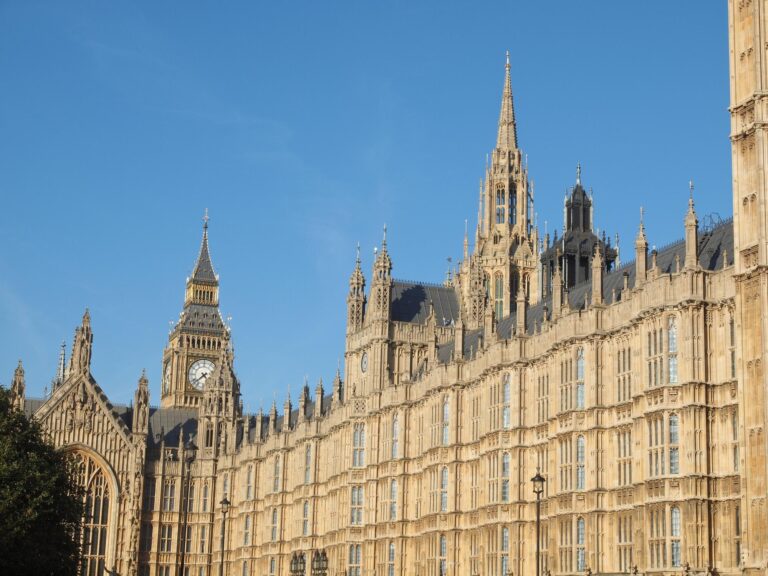
A British prime minister standing at the dispatch box faces MPs whose support keeps the government in office. The United Kingdom is a constitutional monarchy with a parliamentary system: voters elect the House of Commons, and the government must maintain that chamber’s confidence. The monarch remains head of state, but parliamentary support sustains the government’s political authority.
Alongside the elected Commons sits the unelected House of Lords, reviewing legislation. The contrast is built into the system: voters can remove their MP, but they do not elect the members of the revising chamber.
Brazil’s president faces a different bargaining problem. Separately elected from Congress, a president must assemble legislative support, often across a coalition of parties, to advance an agenda. Unlike a British prime minister, the president does not depend on continuing parliamentary confidence to remain in office.
Brazil is a federal presidential republic. Its legislature, the National Congress of Brazil, comprises the Chamber of Deputies and the Federal Senate. Chamber delegations broadly reflect state populations within constitutional limits; the Senate gives each state and the Federal District equal representation. Population and territory thus have different weights in the two chambers.
How Votes Become Seats
The UK Commons uses first-past-the-post: each single-member constituency elects the candidate with the most votes, without requiring an absolute majority. Winning votes in the right places matters more than accumulating them evenly across the country.
The discrepancy can be huge. According to the House of Commons Library’s account of the 2024 general election, Reform UK won 14.3% of the vote but only five seats. Those votes produced a small parliamentary foothold, not a matching share of power.
Brazil’s Chamber uses open-list proportional representation, with states and the Federal District as electoral districts. Voters support a candidate or a party; the votes help determine a party’s or party federation’s seat allocation, while personal vote totals help decide which candidates fill those seats, subject to electoral rules. Several political viewpoints can therefore win representation within one district.
A single-member constituency instead gives an area one identifiable MP. Its losing candidates’ votes elect nobody there. They still express preferences, but in the immediate calculation of seats, they are wasted votes.
Whether Representatives Must Follow Voters’ Instructions
Ross’s impeachment vote shows the stakes of independent judgment. Kansas sent him to the Senate through its legislature, under the system that preceded direct election. He resisted demands to convict Johnson, voted for acquittal, and subsequently lost his route back to the chamber. Defying political pressure can carry a career-ending price.
The delegate model says representatives should carry constituents’ preferences into decisions. The trustee model says they owe constituents independent judgment. Edmund Burke made the classic trustee argument in his 1774 speech to the electors of Bristol: a representative owed them judgment, not simple obedience.
These models collide when local demands conflict with national responsibilities, or new information undermines a campaign promise. Elected officials generally take their legal obligations from the constitution and applicable law, not binding instructions from constituents. Voters supply political pressure. A representative may follow local wishes on one question and exercise independent judgment on another, then have to defend the distinction.
What Accountability Looks Like Between Elections
At Prime Minister’s Questions, MPs rise to seek the Speaker’s attention, questions meet replies across the chamber, and cheers or heckling can interrupt the exchange. The noise has a constitutional purpose: the head of government must face questions in public. Parliamentary questions also let MPs press other ministers for answers.
Select committees offer a different kind of pressure. Members can pursue a subject through successive questions, asking witnesses to explain decisions and expose gaps in an account. In Brazil, congressional committees likewise scrutinize legislation and executive conduct. An uncomfortable answer becomes something the public can examine before the next election.
That examination needs more than parliamentary theater. Opposition parties contest government claims; journalists investigate decisions; courts review government action within their jurisdiction. Citizens can use the resulting evidence to press a complaint or organize advocacy. Without access to information and freedom to criticize officials without intimidation, the next ballot offers a much thinner reckoning.
Whose Interests Representatives Serve
A child affected by school funding cannot vote out the legislators who decide it. Yet that child belongs to the public they represent, alongside adults who backed the losing candidate. Serving a constituency means answering for decisions that reach beyond the people who supplied the winning votes.
A representative form of government therefore carries a moral demand: electoral weakness must not make someone disposable. Constitutional rights place boundaries on majority power, and equal treatment under law matters most when a group lacks the votes to protect itself.
The division of authority can sharpen that problem. Brazil divides power among federal, state, and municipal institutions; a national legislator may address immigration law while a municipal council handles assigned local responsibilities. For someone unable to vote, those divisions can multiply the officials making decisions about their life without giving them a ballot against any of them. Who insists that their interests count?
Key Takeaways
- Judge an electoral result by how votes translated into seats, not only by who won.
- Ask whether an official is defending independent judgment or avoiding an explanation.
- Use scrutiny between elections as evidence for the next electoral decision.
- Include non-voters when assessing whom a policy serves.
- Match a demand to the office with authority to act on it.
Frequently Asked Questions
What is a representative government?
A representative government authorizes officeholders to make public decisions for the people they represent. The difficult test comes when those people disagree: an official still has to decide, explain the choice, and answer for its consequences.
What is a representative democracy?
A representative democracy combines elected decision-makers with broad voting rights and genuine political competition. An election does not make a system democratic if opponents cannot campaign freely or citizens cannot express dissent; the ability to challenge the winner matters too.
How does a representative democracy work?
Voters choose candidates or parties, and the resulting officeholders exercise powers defined by the constitutional system. A winning candidate’s promise is not itself law: proposals must pass through legislative procedures, where other representatives can amend or defeat them.
What is representation in government?
Representation is the relationship through which an official speaks or acts for other people in public affairs. Sharing a community’s background may help an official understand its experiences, but that is a different question from whether the official advances its interests.
What is the role of a representative?
A legislative representative considers bills and examines public spending on behalf of the public. Many also handle constituent casework, helping people raise problems with public agencies; that access does not give the representative authority to guarantee the outcome.
Who is considered a representative?
Elected legislators, including UK MPs, Brazilian federal deputies, and members of state legislatures or local councils, are representatives. Their titles do not give them interchangeable powers: a local council member cannot settle a question reserved to the national legislature.
Know Who Speaks for You
Pick one decision you want changed. Identify the office with power over it, then use an official parliamentary or government directory to find your representative. Read the office’s responsibilities before asking it to act.
Give the staffer a request they can record: “I live in your constituency. This decision affects me because ___. I want the representative to support ___, and I want a written explanation of their position.” Name a bill or a specific problem if you have one. Ask when to expect a reply. Keep the answer and compare it with the representative’s later vote or action. If the office answers a different question, repeat yours. Make the request hard to dodge.