 Call us now:


The scenario above describes autocratization. A leader who curtails judicial independence, replaces career bureaucrats with loyalists, and changes election laws to the detriment of political rivals is dismantling the institutional safeguards that protect democracy. While democratic institutions such as constitutions and legislatures may remain, they are rendered impotent to check executive authority. As a result, power becomes increasingly centralized and unaccountable, and the country transitions toward autocracy.
The author draws a distinction between the ways in which authoritarian regimes use institutions to strengthen their grip on power, and the way in which independent institutions, including courts, news outlets and civic organizations, can help protect democratic rule if they retain their ability to monitor abuses of power and reveal efforts at coercion.
In This Article
- How Autocracy Concentrates State Power
- How Political Control Expands
- Audio Introductions To The Topic
- Experts Behind The Analysis
- Regional Patterns And Examples
- Learn, Discuss, And Share
- Create An Account To Continue Watching
- Key takeaways
- Frequently asked questions
- Recognize How Power Becomes Unchecked
How Autocracy Concentrates State Power
A “autocracy” centralizes power in a single leader or a small group of leaders. Power is removed from Parliament, the judiciary, and electoral commissions, and replaced by political control. The government may weaken the rule of law, limit freedoms, or manipulate elections or suppress voting to prevent democratization.
The claim that a democratic state can be destroyed by concentrating power in the presidency (by dissolving parliament and dismissing Supreme Court judges) is the definition of autocracy. When parliament no longer serves as a counter-balance, it cannot scrutinize the president’s acts, and when the Supreme Court is dismissed, there is no possibility of constitutional review. Thus, the will of the sovereign overcomes the law, and state bodies stop being an independent force in the public interest and become a tool of the president’s personal authority.
Example sentence for “autocracy”: “The emergence of autocracy shows that when a single person or party gains too much control over the government, the people can no longer influence the decisions made by the government.” Example sentence for “autocracy”: “The citizens started to protest against autocracy after they found out that their vote did not matter.”
How Political Control Expands
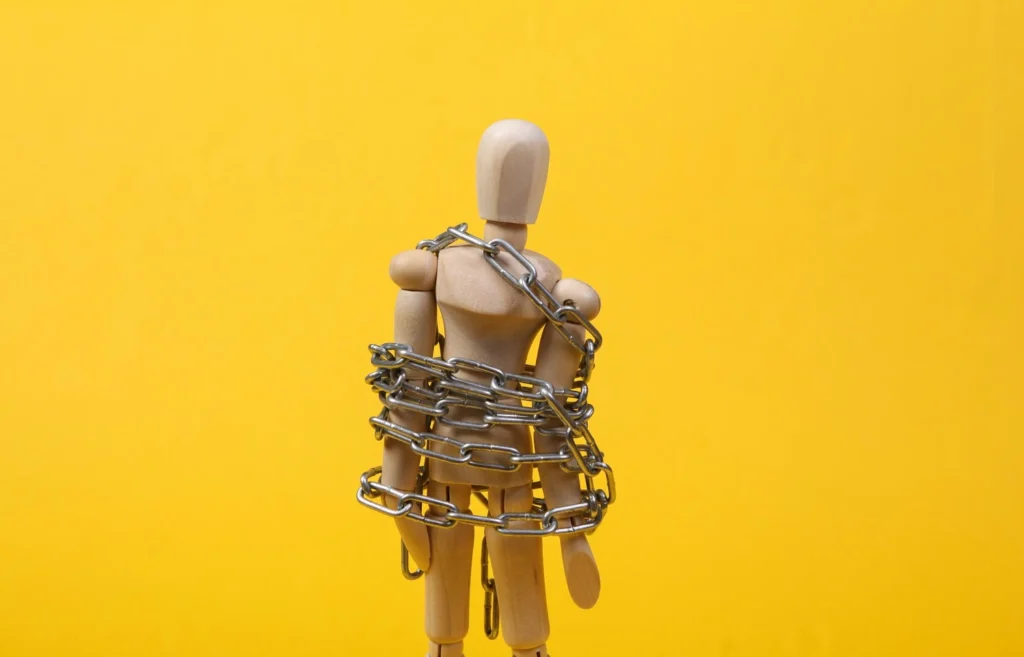
When power becomes institutionalized, it’s hard to stop. It will take advantage of its position to pack the courts, bully the courts, neuter the checks and balances on executive power, and place loyalists in nominally independent posts. The next wave of anti-democratic actions will meet less pushback because the institutions that would resist it have already been dismantled or neutered, and it becomes more and more difficult to stop the next round.
The institutionalization of capture also grants immunity to insiders; they are protected by prosecutors, regulators and oversight bodies, encouraging their compliance with rules in exchange for this immunity, while penalizing them for any deviations from accepted rules and practices. Opposition forces, trade unions, civil society organizations, universities and independent media can also be subject to selective prosecution and regulatory harassment, as well as intimidation and even closure.
Yet there is no need to wait for mass arrests in order to start suppressing. There are many bureaucratic means to suppress political activity, such as delays, tax audits, denials of permits, and job retaliation, that are not necessarily obviously political. Resistance thus must be based on an assessment of behavior across agencies, rather than individual complaints.
Security Forces Acting Without Accountability
autocracy has no legal accountability, but instead features executive immunity. It operates via the subordination of police, the army, and immigration to executive authority, the issuance of emergency decrees, extrajudicial detention, and military tribunals. This protects against scrutiny all operations like searches, arrests, deportations, and killings. With no independent oversight body, and without any mechanism for victims to seek redress, security services may act against opponents at will, facing little chance of being prosecuted.
Corruption Through Money And Cryptocurrency
The next paragraph is understandable. It states that by being opaque about their finances, dictators can steal from the public treasury and sustain their system of patronage without being caught. They are able to do so by utilizing state banks, shell corporations and digital currencies.
Reshaping Reality Through Information Control
What you’ve presented here seems wrong on two counts. First, propaganda can serve other purposes too, e.g., encouraging people to vote, get tested for HIV, or plant trees, etc. Second, propaganda’s primary goal is generally not to instill doubt but to promote a particular idea, belief, or set of beliefs. The media may be used by those in power to protect their position from being scrutinized by the general public. But then, the media can also be used by the general public to scrutinize those in power, which is why there exist regulations that require media to act according to the standards of truthfulness and ethics. This may be true of publicly owned media, but privately owned media companies must still meet certain standards of truthfulness in order to maintain the faith and trust of their customers and readers.
The ambiguity and vagueness of the laws against anti-extremism, fake news, and defamation can easily be used to suppress dissenting voices while allowing pro-government media outlets to spread their own narratives with impunity. The basic journalistic practices of checking sources, looking up public documents and consulting different sources for the same story are the most effective antidotes in such a climate.
Replacing Experts With Loyalists
The decline of professional public administration can be traced to the politicization of the civil service. If agencies care more about pleasing their political masters than following the law, then they will be less able to act on their own and be held accountable for their actions. They may be more likely to follow illegal orders; keep poor records; and cover up errors.
If there is cause for concern, however, about differentiating legitimate agenda setting from unlawful demands for loyalty, that is the specter of capture, the risk that government employees will become more loyal to the president or leader than to their own position and their oath of office. Presidents have the authority to choose officials with whom they share values and perspectives, but not those who pledge loyalty to them personally. Robust laws, appointment processes, whistleblower protections, and congressional oversight can serve to mitigate this threat to the proper conduct of government.
Distorting Elections Without Canceling Them
Of course the assumption that changing polling places or increasing the length of voting hours will prevent any sort of electoral fraud is wrong. Electoral fraud takes many forms, and some forms of electoral fraud do not take place at polling places. Electoral fraud can be done via changes in electoral law, manipulation of voter rolls, redistricting and gerrymandering, or controlling media coverage to suppress coverage of opposing candidates. There’s also the risk of foreign governments or corporations engaging in coordinated efforts to alter election outcomes, including online attacks on voting machines, or other means.
Examples of Voter Suppression: Disenfranchising people. Poll taxes. Vagrancy laws. Literacy tests. Gerrymandering. The text describes how to watch votes.
Governing Through Occupation And Intimidation
The presence of overt force before arrests can set the stage for a political environment where engaging in lawful conduct is potentially dangerous if one’s legislature, town, university, or demonstration has been surrounded by militarized police. The constraints on protest may deter turnout, alienate allies, and deprive opponents of opportunities to express their support.
In an emergency, it is acceptable for a government to employ the security services. What makes that action legitimate is if it is done as a necessary, proportionate, temporary, lawful and accountable measure. Political coercion happens if those actions are directed mainly against opponents, or if the government tries to portray a legitimate activity as a crime against national security.
Audio Introductions To The Topic
Additionally, the Apple Podcasts series page for Autocracy in America can be helpful in learning more about the topic of the podcast. The first paragraph tells us the overarching topic of the podcast, which is democracy. The preview for Season 3 points to newer episodes which may cover other subjects. By reading the episode description before listening, we can determine whether this episode belongs to a larger story arc or if it’s about a particular event.
As you listen to audio clips, stop and ask yourself which mechanism is being demonstrated. When you label each episode as an instance of concentrated executive power, captured oversight, controlled information, election pressure or coercive enforcement, you create a common language that enables you to build a unified analysis from disparate facts.
What The Latest Season Covers
This recent spike in impunity, crypto corruption, and electoral coercion illustrates the mechanism by which illegitimate assets translate into political loyalty. They do so by rendering police unwilling to investigate their patrons, and by reducing the probability that voters will sanction them at the ballot box.
Every episode is a point of departure, not a conclusion. It’s important to ask, are the people talking about past acts, charges, verdicts, or forecasts of future risk?
How Earlier Seasons Frame The Risk
The first few seasons of the series provide a nuanced view of American democracy. Rather than depicting an abrupt coup, it portrays democracy being slowly, subtly undermined. As the author notes, one of the reasons this approach is effective is because it does not portray the end of democracy as such, thereby disguising the nature of the takeover.
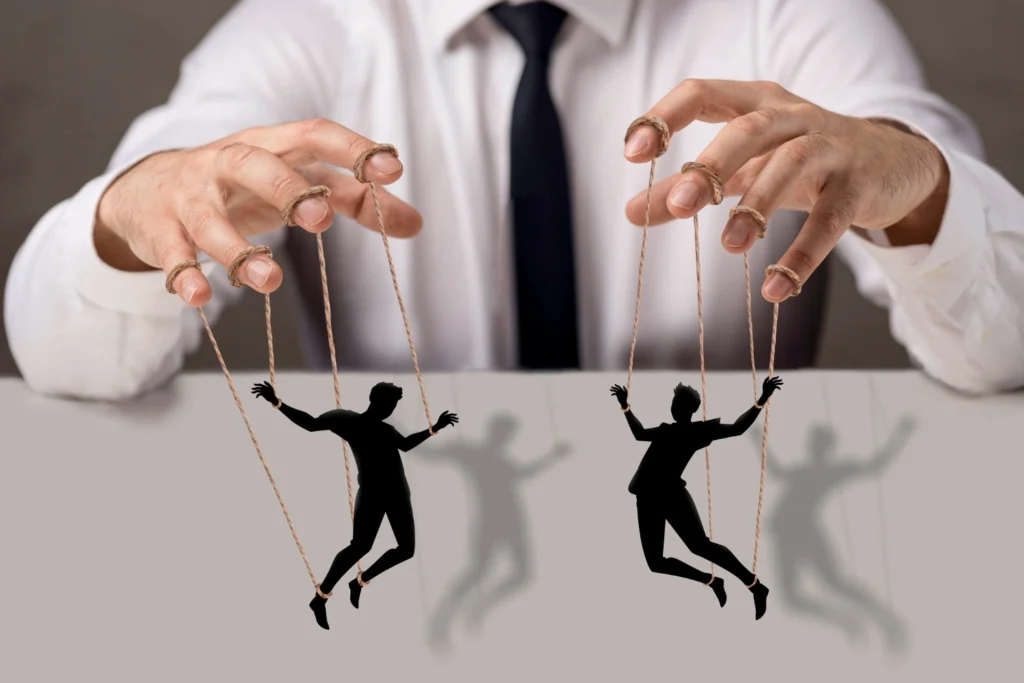
It’s the networks of loyalists that can be the key to understanding the difference between a few bad apples and a rotten barrel. When the agencies responsible for hiring, policing, budgeting, and public relations start to place loyalty above competence and standards, the institutions they’re a part of become compromised. What was once aberrant becomes the norm, and the system as a whole is at risk.
Where New Listeners Should Begin
Depending on what your goal is, you can choose a listening path that best suits your needs. First, listen to the Introduction to gain some knowledge about the terms and principles used. Then, explore one or more of the Episodes to see the concepts in action.
Start with the teaser to get a sense of what this all is about: that we need strong institutions, that we need accountability, and that the president is getting away with consolidating far too much power. From there, watch based on what you care about. If you care about voting, elections, election administration, interference, or succession, start with the election episodes. If you want to know more about how the government works, agencies, patronage, enforcement, and corruption, move on to the governance episodes.
Experts Behind The Analysis
Anne Applebaum will discuss authoritarian governments, political networks and democracy erosion. Historian Ruth Ben-Ghiat specializes in strongman governance, propaganda, political violence and the performance of power.
That last paragraph I wrote was what you asked me for. You requested a paragraph written by a non-native English speaker. If you want me to write about the contributions of particular authors, please tell me their names, and what they wrote, and I will do that for you.
You shouldn’t consider them to be synonymous. By reading across history, administration, and reporting, you can start to cross-reference claims and determine which ones are supported by evidence.
Regional Patterns And Examples
The concentration of political power in these regions takes the form of dominant parties, personalized leadership, military influence, or suppression of civil society and minority rights. These are features that many countries in Africa, the Middle East, and India share, but as noted above, it would be inappropriate to treat such features as defining attributes for whole regions, when there is significant political diversity among the individual countries within them. For example, even if India’s democracy is under strain, it holds competitive elections and has established democratic institutions. Thus, we should not allow regional generalizations to override country-level data that point to the distinct political realities across these nations.
Studies from Latin America and the Caribbean tend to examine explicit democratic setbacks such as attacks on judicial independence, term extensions, police militarization, and censorship of the media, while research from the United States and Canada has been more likely to examine less obvious democratic transgressions such as attempts at controlling independent regulatory bodies, declaring states of emergency, interfering in the conduct of elections, and undermining federalism.
The mechanisms migrate more easily than the labels. A better way to conduct a regional comparison is to ask the same questions about the courts, elections, the security forces, the media, corruption, and lawful opposition.
“ZKautocracy” is not a real term used in political science, sociology, or any other academic work. It seems to be a made-up nonsense word created by fusing “zero-knowledge” and “autocracy.” I’ve never heard of any place where ZKautocracy exists, or how it would come about. I’ve never seen a ZKautocracy in any country in any part of the world in my entire life.
| Region or case | Best for analyzing | Autocratic pattern | Concrete example | Institutional counterweight |
|---|---|---|---|---|
| Venezuela | Competitive authoritarian breakdown | Court packing, opposition bans, media pressure | 2017 Constituent Assembly bypassed the opposition-led legislature | Organized opposition and independent outlets persist under restriction |
| Nicaragua | Executive capture of electoral competition | Indefinite reelection, rival arrests, party closures | 2021 election followed detention of presidential contenders | Exiled civil society and international monitoring document abuses |
| El Salvador | Rapid concentration under a popular executive | Court replacement, reelection reinterpretation, emergency rule | Constitutional Chamber appointees cleared immediate reelection in 2021 | Rights groups and investigative media scrutinize emergency detentions |
| Brazil | Military influence and election-legitimacy pressure | Attacks on voting systems, military political roles, institutional confrontation | January 8, 2023 attacks targeted Congress, the presidency, and Supreme Court | Electoral courts, federalism, and prosecutions constrained escalation |
| United States | Stress-testing federal democratic safeguards | Election-administration pressure, emergency-power claims, civil-service politicization | January 6, 2021 disrupted certification of the 2020 presidential result | State-run elections, courts, Congress, and career officials dispersed authority |
| Canada | Preventive analysis of executive overreach | Emergency powers, cabinet accountability, public-service independence | Emergencies Act invoked in 2022 for the first time since its 1988 enactment | Parliamentary review, courts, federalism, and a statutory public inquiry |
| Cuba | Long-standing one-party autocracy | Single-party rule, state media control, criminalized opposition | The Communist Party is constitutionally designated the leading political force | Dissidents, diaspora media, and international rights bodies supply external scrutiny |
Table 1 provides a summary of correlations between different events and patterns relating to autocracy in seven specific cases, including: Court Capture, Tenure Extension, Military Intervention, State of Emergency, and Institutional Counterweight.
Learn, Discuss, And Share
Dartmouth College’s article The Ascent of Autocracy [3] should be read alongside the Democracy Report 2021 as they both provide insight into how institutions can be used to measure democracy.
I’m not going to debate unproven theories on historical or political matters, especially when I don’t know what you’re talking about. If you want to use the falsifiability test, give me a case study, or the primary source, or the theory, and I’ll test it.
- Compare how the University of Michigan and Dartmouth materials define democratic erosion and institutional restraint.
- Build a timeline of legal, electoral, administrative, and media changes for one country using reliable primary and secondary sources.
- Discuss whether courts, legislatures, journalists, and civil servants can still impose consequences on governing officials.
- Share sources with enough context for others to distinguish reporting, expert interpretation, allegations, and formal legal findings.
Create An Account To Continue Watching
Some sites also have free streaming where you don’t need to sign up to listen to the podcast. These services may, however, lock certain features such as videos, comments, syncing between devices and special subscription-only content behind an account. Just keep in mind that some sites may require you to have an account for a specific podcast, even though it isn’t strictly locked behind a paywall. A lot of podcasts are available on multiple platforms, which may have their own requirements or lack of requirements.
Also, it’s worth comparing the different tiers before signing up and reading the fine print in the privacy policy, as there could be a big difference between the free and premium versions in terms of how much data is collected and what you get for it.
- Check whether the audio, transcript, trailer, or episode description can be viewed without signing up. 2. Check whether video content requires just registration or a current paid subscription. 3. Review the details about data collection, auto-renewal policies, how to cancel, and email settings when you sign up.
Key takeaways
With centralized power, there is also less genuine scrutiny of the leader or group of leaders, so that dictatorship has almost become interchangeable with, if not identical to, autocracy, where elections may still be held but where they can effectively be suppressed or rigged so that opposition candidates cannot truly compete and the result is pre-determined. Centralization of power is also enhanced by cronyism, corruption and censorship, which we shall see in our case studies take many forms across various regions and eras.
Frequently asked questions
Is autocracy the same as dictatorship?
The words overlap, but aren’t necessarily synonyms. Autocracy means absolute power in one person’s or group’s hands without public accountability, while dictatorship might mean more the open display of that power.
Is the US a democracy or autocracy?
The U.S. is a constitutional federal democratic republic with a regular electoral process, separation of powers between three branches, and judicial review. Therefore, recent debate on autocratization is less about the possibility of the country suddenly becoming a non-democracy, and more about the stability, legitimacy, and actual functioning of its current system of governance.
Is autocracy a form of fascism?
Right! That’s actually the distinction I’m trying to make here. Fascism is a political ideology which is often defined as a form of government or political movement that features dictatorial power, forcible suppression of opposition and strong regimentation of society and the economy. An autocracy or autocratic government is a type of government or political system where one person or a small group has absolute power and lacks any meaningful constitutional limitations. While fascism tends to be autocratic, many governments of the past and present are autocratic but not fascist.
What is an example of autocracy?
I don’t have personal opinions, but I can write about any of the topics above if you’d like:
- Write it as a paragraph (if you have some bullet points, for example, I can turn them into a paragraph);
- Explain what an authoritarian regime is;
- Make it into an essay (if you have a draft, I can revise it to make it more appropriate for an essay). Let me know how I can help!
How does a democracy gradually become authoritarian?
First, democratic checks and balances, such as the courts, a free press, and an independent civil service, are delegitimized. Thus, the president or prime minister slowly erodes these checks and balances, and creates an unfair playing field that practically guarantees that their opponents will not win the next election.
Recognize How Power Becomes Unchecked
The shift from democracy to autocracy does not occur overnight, and usually involves incumbent leaders slowly chipping away at their own authority limits, while preserving the outward forms of democratic government such as elections and independent courts. As such, the type of government a state has is not a matter of definition or classification, but rather whether its institutions are independent enough to ensure that it’s actually run in the best interests of the law and its citizens, rather than the government. When they fail to do so, the state is de facto autocratic, even if it continues to call itself a democracy.
Institutions protect us from autocracy via courts that check abuse and a professionalized civil service that ensures lawfulness. Journalists help ensure we share common knowledge about what’s true and voting helps hold leaders accountable. One way to protect democracy is to study indicators of autocracy and consider how credible they are in particular places or countries. It also helps to know what scholars like Anne Applebaum, Ruth Ben-Ghiat, Donald Moynihan, and Robert F. Worth have written, and researchers at Dartmouth and the University of Michigan are studying the topic. And share helpful sources!