 Call us now:


Socialism vs communism is fundamentally about ownership, markets and political power. Socialism allows for democratic politics and mixed economies, and can include private business, whereas communism advocates for the collective ownership of production and a classless society, no capitalism. (Marxist theory).
The Core Difference Between Socialism And Communism
You may have landed here seeking to understand the distinction between communism and socialism. To begin with, socialism is the wider umbrella term and may encompass a broad range of systems that provide public healthcare, allow workers to own their workplaces, privatize utilities or exert democratic control of the commanding heights of industry, or any number of similar institutions. The term communism is much more defined, particularly since Karl Marx and Friedrich Engels gave it a strong and explicit historical and political context in the struggle of the working class and its ultimate revolutionary victory over the ruling class.
The issue is that the lines between communism and socialism can often be quite blurred because politicians, political science textbooks and government regimes have used and still use these words with differing meanings to describe their beliefs and political institutions. One political party can claim to be socialist but defend liberal democracies with market economies and elections. And a ruling communist party can claim that its nation is in the process of building socialism and is currently in that transitional phase on the long road to communism.
Introduction
The distinctions between communism and socialism hinge upon each ideology’s treatment of capitalism. Both systems decried inequality, the accumulation of wealth in few hands, and the private ownership of the means of production. Socialism, though, is more frequently inclusive of capitalism: publicly owned enterprises, free enterprise in some sectors, and state-directed or state-regulated enterprise in other sectors. It usually incorporates the redistribution of wealth by taxation or social security programs.
Communism in Marx’s theory goes one step further by advocating the total elimination of capitalism as the ownership system in favor of public ownership. Communists, when in power, usually imposed state ownership, one-party rule, and the centrally planned economy. In practice, socialism includes both democratic, authoritarian, revolutionary and reformist varieties.

Marx, Industrial Capitalism, And The Roots Of Communism
Karl Marx wrote during the Industrial Revolution, a time when factory owners held significant power and workers were subjected to difficult working conditions. Along with Friedrich Engels, he contended that history had progressed primarily through class conflict. In the pamphlet published in 1848, titled the Communist Manifesto, Marx and Engels portrayed capitalism as a system that was predicated on conflict between the working class and owners of the means of production.
This is where things get interesting. At this point, the distinction between communism and socialism were not as rigidly defined as they are now. While Marx did use the terms socialism and communism interchangeably at certain points in history, modern interpretations have distinguished them. Communism is usually defined by the revolutionary toppling of capitalism. Socialism, on the other hand, is defined by a desire for a democratic, or socialist economy through the democratic process. Socialists often focus on building unions and participating in electoral politics as a means for gradual reform rather than outright revolution.
The History Of Socialism Before And After Marx
The history of socialism didn’t start with Marx. Prior reformers had already railed against destitution, industrial abuse, and inherited privilege, while envisioning cooperative communities, public ownership, and a safety net. That matters, because the distinction between socialism and communism isn’t simply a matter of “soft” or “hard.”
After Marx, socialism divided into reformist and revolutionary currents. Some socialists hoped to overthrow capitalism in favor of a new order. Others simply hoped to curb capitalism’s worst excesses with labor standards, public services, and democratic oversight of key industries. Eventually, it was the reformist variant that led to the emergence of social democracy across Europe.
Capitalism, Private Property, And The Means Of Production
So let’s go over what is the difference between communism and socialism. For this we need the vocabulary. In this context, private property doesn’t refer to your personal possessions (shoes, phone, table). It refers to productive property. Productive property includes factories, mines, farms, railways, banks, and digital platforms, all of which have capital as a primary component of their revenue (profit). These are things that are used to create surplus value through the work of others.
Often socialists will advocate for public ownership of some of the means of production and services. Generally, though, communists call for full collectivity of all means of production and distribution. The market economy is built on the ability of private owners to compete over profit. The planned economy is one where the state or the collective determine how production and distribution are organized.
Differences Between Communism And Socialism
The distinction between the economics of communism and socialism often begins with property ownership. Socialists are willing to tolerate private enterprises, particularly small-scale ones, yet they advocate for state or cooperative ownership of utilities, healthcare, public transportation, and housing. Communists, on the other hand, typically aim to eliminate, or severely limit, private property ownership in capital goods.
The nature of state involvement is another point of divergence. Socialist systems can maintain markets alongside a state that regulates business, taxes wealth, and runs social welfare programs. Communist systems have more typically placed economic planning and political control into the hands of a single central authority; see Britannica’s page on how socialism and communism are different for an outline.
Difference Between Socialist And Communist Politics
Socialist political parties and policies have often been parliamentary, democratic, and reformist, whereas communist political movements historically relied on revolutionary theory and, for a long time, were one-party states. If you ask the question is socialism communism, the answer is no even though socialist and communist movements have sometimes overlapped in their goals and their history. Democratic socialists seek public power through the ballot box. Marxist-communist movements have emphasized class struggle, proletarian revolution, and a society beyond capitalism.
How Each System Treats Property And Markets
Whether a government is socialist or communist depends on its stance on private business. Socialist governments may tolerate small businesses, such as restaurants, retail, technology companies, and farms, although these businesses would be taxed and regulated. The government might also nationalize the country’s railways, hospitals, and power generation systems. Communist systems usually either abolish or heavily restrict or control private businesses of any size. (Market socialism accepts price competition and market coordination to some extent.) A command economy sets economic targets and outcomes through central planning.
What They Share
Socialism and communism share the premise that capitalism generates great inequality, that political power and resources will become concentrated, and that workers should exert more control over the economic system to ensure fairness and shared prosperity. Both ideologies also trace their history back to labor and industrial conflict; the history of socialism has overlapped with the history of communist organizing. Yet their common background has not rendered the two ideologies the same. Consider them cousins rather than identical twins.
Communism After The Russian Revolution
The Russian Revolution made communist ideals a reality by putting them in power. The Bolsheviks assumed that they stood in for the proletariat; they sought to transform the economic system and the nature of social order. The Bolsheviks wanted to restructure Russian society to be more egalitarian. To that end, they centralized economic power in the state and the Communist Party. By turning a theory into a government policy, the Communists established a state of government that was different from most other governments in the world.
Soviet leaders called their country “socialist” on the way to becoming a Communist state. However, they created a system in which a centralized government controlled the production and consumption of goods. Politics were controlled by a select few; freedom of the press and democracy did not exist. The link between the labels of “socialist” and “communist” and the Russian Revolution are explained on this history.com page about socialism and communism.
Russian Capitalism After Communist Rule
With the USSR’s demise came an abandonment of the Soviet system in favour of the free market. This shift saw the privatization of Russia’s former public institutions and assets, which ended up in the hands of the state’s former employees, and a few other people. They became the country’s wealthiest oligarchs, and their businesses came to control entire industries, capital markets and even natural resources.
It is worth dwelling on that sentence for a few seconds. That Russia could so rapidly and completely move from state capitalism to a free market shows that capitalism does not necessarily entail either democracy or equality. Free market forces need not result in any sort of equality. But there can be an absence of equality and the concentration of political power. The lesson here seems to be that there is good reason to distinguish, as I do in the rest of this post, between political freedom and economic ownership.
Socialism And Communism In Practice
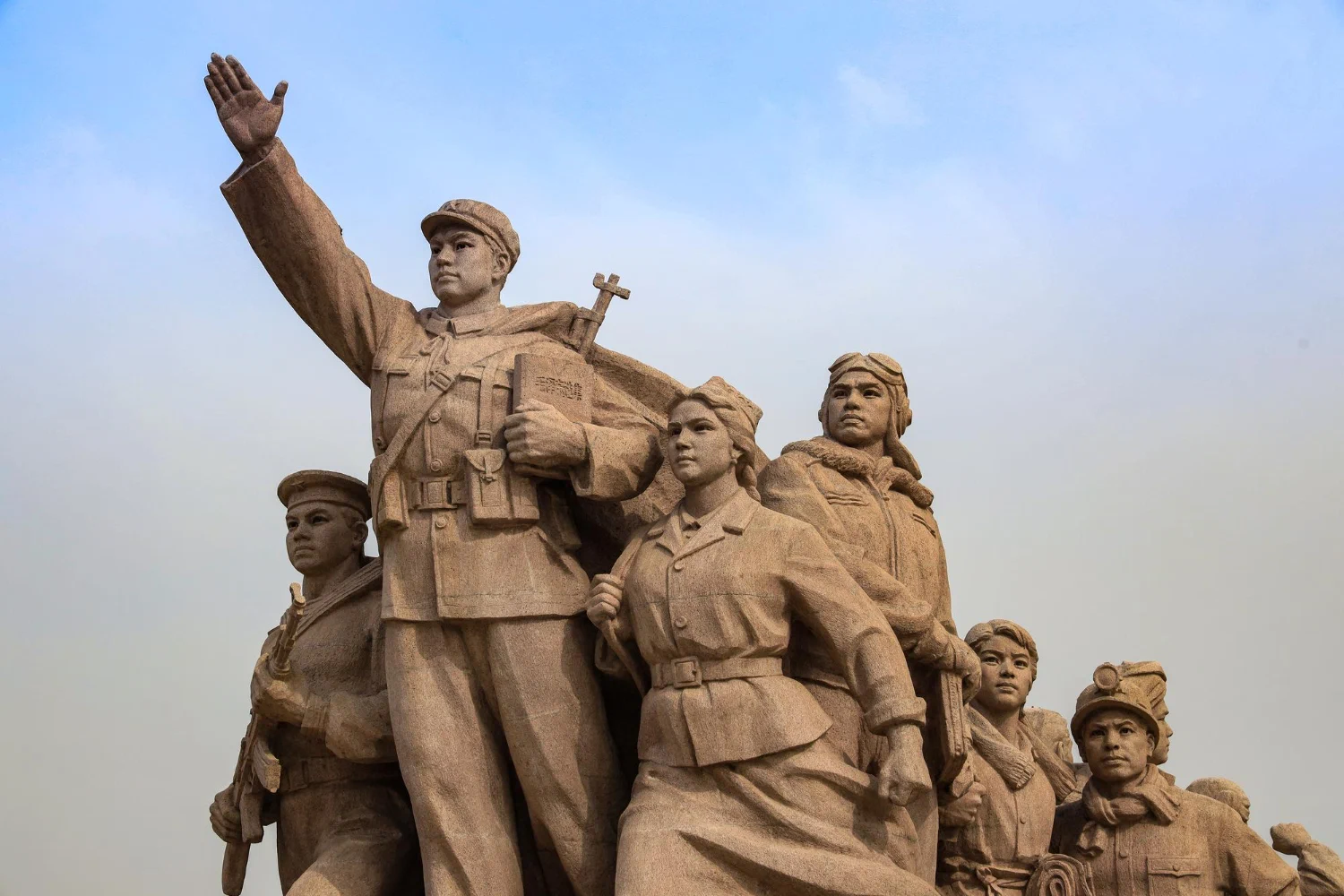
The two instances most often given of communism are the Soviet Union and China, because these are the ones that tried to construct a single-party society based on the principles of Marxism-Leninism; in China, market activity was later permitted within a society ruled by a Communist Party, so it’s unclear whether one could properly describe its society as communist, but the political party always controlled China’s system.
Social democratic countries provide a contrast of capitalism vs socialism vs communism, which typically combine private ownership and markets with socialized health care, protections for labor unions, pensions for the retired, and high taxes; they are not examples of communism, but mixed economies with strong welfare states.
Is Democratic Socialism The Same As Communism?
Democratic socialism is not the same as communism; it wants more public control, more worker power, and more social equality, all through democratic elections. Democratic socialists do not see one-party dictatorship as the way to transition to socialism. Some, like socialists today, may favor more public ownership than most social democrats do.
Social democracy is more moderate, since it accepts a capitalist system that is regulated and uses taxes and public spending, as well as the social safety net and public services, to reduce wealth inequality. Both systems can be led democratically. It is this that distinguishes both systems from Soviet-style Communist Party rule.
European Social Democracy
The reason European social democracy causes some people to conflate the rhetoric of socialist politics with the everyday reality of public healthcare, state-subsidized education and other services, labor rights, and pensions is because the social-democratic governments do exactly what this article is about. Private firms and capitalist competition can coexist with social safety nets, and they can coexist with the redistributive effect of tax-and-spend public service programs. These are not, strictly speaking, capitalist countries, but they are not communist societies. They are mixed economies, with some elements of socialism and some elements of capitalism. They are not even classless Communist societies.
Why Socialism Became Politically Toxic In America
Here in the U.S., socialism has been a poisoned word for much of the last century, due to the Cold War. For so long, debates were dominated by anticommunism, with critics lumping all leftish economic measures together in hopes of associating it with Russian domination. The term took on negative connotations as it became associated with authoritarianism rather than a purely economic ideology.
That stigma continues to influence contemporary discourse, and how we think about things like taxes, welfare, universal healthcare, and the role of government in people’s lives. To one person, socialism conjures images of the Soviet Union; to others, it brings up public healthcare. This sort of muddiness, in part, results from the tendency to conflate any and every government policy or program in existence to being “communist,” thus obfuscating crucial differences.
Frequently asked questions
A1: A nation might be socialist but not communist if it strengthens the public sector, improves social security or social care or socialized health care, strengthens workers’ rights, and protects citizens’ rights while still having some or even many market-based private industries and elections and civil liberties. That’s the short answer to what is the difference between communism and socialism in real-life governments.
A2: Yes, but it depends on the system. Many socialist and social democratic countries do allow private businesses (including private enterprise), especially smaller and medium-sized firms. In this sense, socialism does not mean “abolish all private enterprise.” But the question to ask is which industries are still private and which industries must be publicly owned and controlled and run? Private enterprises are usually paid taxes, then the government uses tax revenue to run public goods and public services that the market does not provide or would not provide to everyone.
A3: That’s one of the reasons. Both socialism and communism critique capitalism; both talk about socializing the economy or collective ownership, especially of production; and many communist parties in government, like the Communist Party of the Soviet Union, described their system as socialist, claiming it’s just a step on the path toward communism. Therefore, asking is socialism communism is more helpful to ask what’s the difference between communism and socialism, so you’ll understand that one label does not mean they are the same.
A4: Both. The Soviet Union called itself socialist and was ruled by a communist party that said it was building a communist system. So both terms have been used to describe the Soviet Union over time, but historically, the country had state ownership of major industries and resources, a central planning economy, one-party state and no political freedom for opposing views or parties to run against each other.
A5: Democratic socialism emphasizes democratic processes, political pluralism, and public ownership of major economic resources, whereas classical Marxist communism stresses class struggle, revolution, and the eventual end of capitalist relations. The question to ask is whether or not you use democratic procedures (voting, elections) or you use authoritarianism, dictatorship, suppression and control or state monopoly of political power, that is, how political power is exercised.
A6: Capitalism still provides private ownership of assets, free market and competition among firms, investment by individuals and businesses, and so on. The state then regulates the capitalist system and may provide public goods and services through taxation and other means to redistribute income and to provide public welfare or social protection or social security. That’s a mixed economy and it can be a socialist economy without communism. A country with a capitalist economy does not have to be a communist system.
Socialism and communism are related ideas but they are not the same thing. Both came out of criticism of capitalism and concern over economic inequality, but socialism is a much broader term that includes many different models, including democratic socialism and mixed economies with both public and private sectors. Communism (at least in Marxist theory and Soviet-style practice) is about collective ownership of the economy, class struggle, and ultimately the goal of abolishing capitalism and private property. To understand socialism vs communism, it is useful to compare their views on ownership, market mechanisms, political power and historical examples rather than rely on the term itself. For a more historical overview, see the History.com article on socialism and communism and Britannica.