 Call us now:

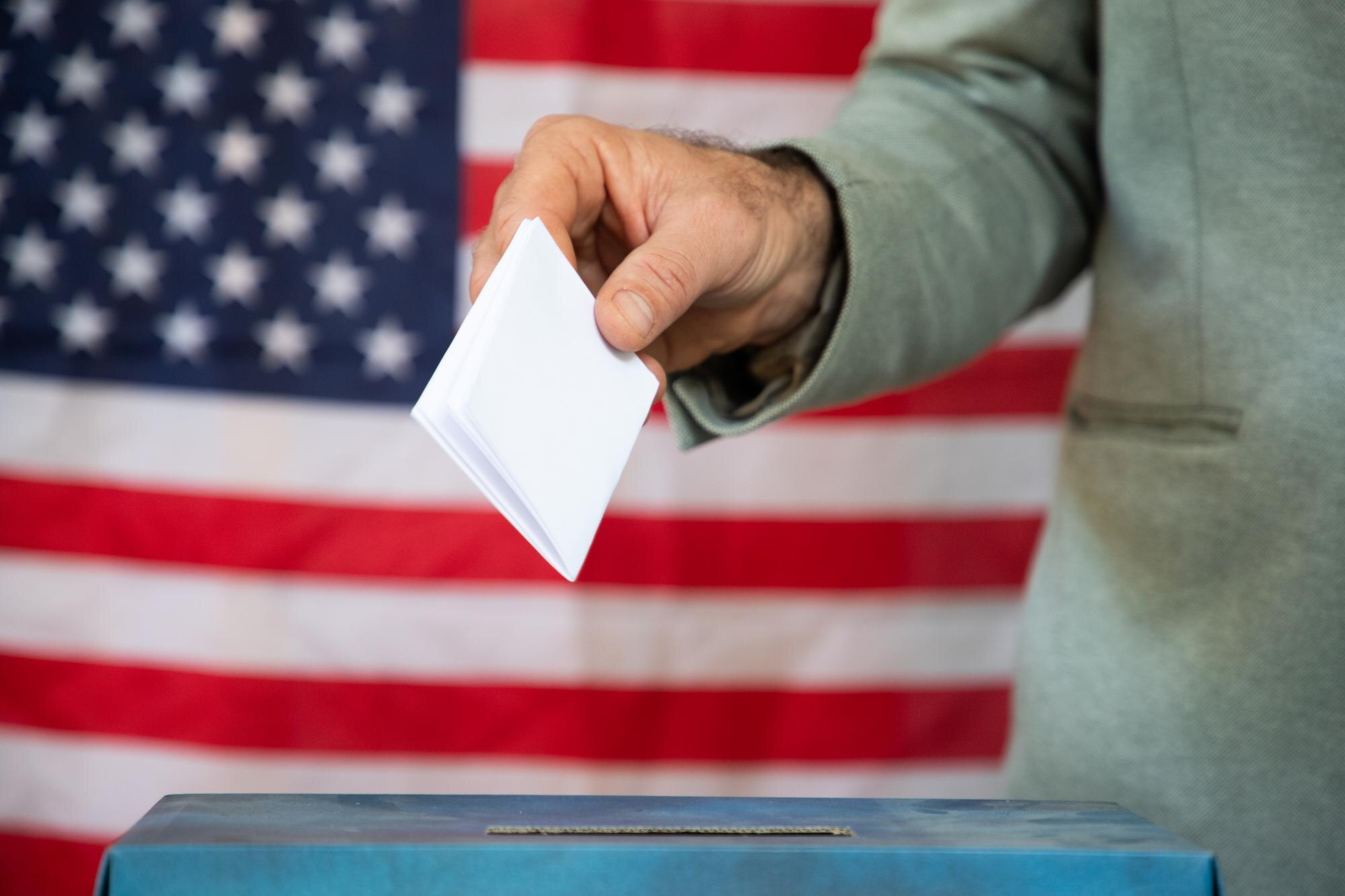
A recall election lets voters remove an elected official before the official’s term ends, if the law allows it and a petition qualifies for the ballot. California voters used that power against Governor Gray Davis in 2003, ending his governorship and choosing Arnold Schwarzenegger to replace him. The confrontation turned a petition campaign into a fight over who would run the state.
That is recall’s political force: a victory at the last regular election may not secure an official’s full term. The fight passes through three gates: eligibility, petition qualification and an election. Who can be challenged, what gets the challenge onto the ballot and who takes power afterward depend on the governing law.
In This Article
- What Recall Does and Who It Can Reach
- When Voters Need Legal Grounds
- How a Petition Reaches the Ballot
- What Voters Decide at the Election
- How a Replacement Takes Office
- What Past Recall Elections Show
- What Recall Offers and What It Costs
- Key Takeaways
- Frequently Asked Questions
- Check the Rules Before Acting
What Recall Does and Who It Can Reach
Recall puts an officeholder’s remaining time in office at stake. A mayor facing a petition campaign still holds the job while opponents collect signatures, but a successful effort can force a public decision before the next scheduled election. Petitioners must first establish that the law gives voters that power over this particular office.
The office matters. A governor may be covered by statewide recall provisions, while a school board member’s eligibility comes from a different part of state law. A municipal charter may supply a city’s procedure. Those overlapping sources can give voters power over local officials without extending the same power to every state office. Appointed officials have their own removal arrangements; holding public office alone does not establish recall eligibility.
The boundary became a real confrontation in New Jersey when activists tried to recall U.S. Senator Robert Menendez. In 2010, the New Jersey Supreme Court rejected the effort, holding that the federal Constitution did not permit the state to recall a U.S. senator. Organizers could campaign against Menendez, but they could not make their petition into a binding removal election.
That case marks recall’s federal limit. The U.S. Constitution supplies no voter-recall mechanism for the president or members of Congress. Presidential impeachment and congressional expulsion belong to government institutions, not a constituent petition drive. For a federal officeholder, the path from public opposition to early removal is therefore fundamentally different from the path available against an eligible mayor or governor.
When Voters Need Legal Grounds
Where recall is authorized, the next fight concerns the reason for using it. Some jurisdictions allow voters to recall political officeholders over policy or lost confidence. Others demand specified legal grounds. A petition’s explanation can therefore be either a political argument for voters or an allegation that must first satisfy a legal test.
Kansas illustrates the second approach. Its grounds include misconduct in office and failure to perform duties prescribed by law. An unpopular decision does not automatically fit those categories. Petitioners must connect what they say the official did to a ground the law recognizes, and the process may include review of whether that allegation is legally sufficient.
Wisconsin’s fight over Governor Scott Walker shows the stakes when a recall can carry a policy confrontation. His 2011 Act 10 legislation restricted collective bargaining for most public employees, helping drive the campaign to remove him. The conflict reached a recall election the following year; opponents did not have to secure a criminal conviction before asking voters to end his governorship.
A legal threshold and a persuasive campaign are different tests. Clearing a review of the petition’s grounds does not decide every disputed fact, and an allegation that draws crowds can still fail a statutory requirement. Wisconsin also imposes a timing barrier: an official generally must have served one year of the current term before a recall petition may be filed.
How a Petition Reaches the Ballot
For petitioners, the pressure is signatures against a clock. Consider a volunteer with a clipboard at a street corner: every conversation takes time, some passersby live outside the district, and an enthusiastic supporter may already have signed. The approaching deadline does not move because a campaign attracts attention. It has to produce enough valid signatures.
The clipboard, however, needs the right document. A jurisdiction may require a notice of intent or an initial application before circulation begins, along with prescribed wording or publication. An online petition can demonstrate anger without satisfying those rules. Signatures gathered on an unauthorized form may be unusable, however many people support the cause.
Once circulation is authorized, the campaign works toward a legally defined threshold. For a California statewide recall, that generally means signatures equal to 12 percent of the votes cast for the office in the preceding election, plus a geographic-distribution requirement. Elsewhere, the calculation may use another voter total. Population alone does not tell organizers their target.
The target also has boundaries. In a local recall, a supporter from outside the officeholder’s district may be ineligible to sign. Election officials can review voter eligibility and required information, as well as duplicate signatures. Campaigns commonly collect more names than the minimum because the submitted total will not necessarily survive review intact.
Extra signatures provide a cushion, not a cure for a missed deadline. After submission, review determines whether the petition qualifies, and disputes over compliance can reach a court. Certification gets the campaign through the petition gate. Only then does the broader electorate get its turn; the people who signed have demanded a vote, not cast the deciding ballots.
What Voters Decide at the Election
California voters in 2003 faced two decisions on one ballot. First came the question of whether to recall Davis. Then came the choice of a possible successor from a field of 135 candidates. The crowded replacement contest included Schwarzenegger, but voting for a challenger and voting to remove the governor remained separate acts.
If the recall failed, the replacement result would have no effect. California used the same two-question structure in its 2021 gubernatorial recall.
Other systems turn the recall into a contest between the incumbent and challengers, without a separate yes-or-no removal question. Russell Pearce’s Arizona contest and Scott Walker’s Wisconsin contest followed that candidate-election approach. The ballot structure determines whether voters are judging the incumbent directly against alternatives or answering a removal question before considering succession.
The counting rule follows that structure. A majority requirement on a removal question concerns votes on that question, not the signatures that qualified the petition. In a candidate contest, the applicable election rule determines the winner. Scheduling is a separate step after qualification: the responsible authority sets the vote under the governing calendar, allowing time for ballot preparation and voting. A petition campaign’s announcement does not itself set election day.
How a Replacement Takes Office
Davis’s defeat delivered power to someone who had not won a majority in the replacement contest. California’s official results show Schwarzenegger received about 48.6 percent of that vote. Enough voters agreed to remove the incumbent, while the choice among possible successors was more divided.
The resulting transfer was authorized by the ballot rules, not by a requirement that the successor match the removal vote. A same-day replacement contest can produce that result because the two decisions measure different things: agreement that the incumbent should leave and preference among the available candidates.
Other offices use a different route after removal. An appointment, succession by another officeholder or a later election may fill the vacancy. The successor may serve only the unexpired term, and the law sets the effective date of removal and any temporary arrangements. Those provisions determine who exercises authority between the incumbent’s departure and the next regular election.
California’s replacement rule resolved that question through the candidate contest itself.
What Past Recall Elections Show
Recall spread in the United States as a Progressive Era direct-democracy reform alongside initiative and referendum. Los Angeles adopted recall in 1903; Oregon adopted it for state officials in 1908. Supporters wanted an accountability mechanism between regular elections, but adoption produced separate state and local systems, not one national procedure.
Those systems have delivered both ousters and successful defenses. North Dakota’s Lynn Frazier became the first U.S. governor successfully recalled, and Davis became the second. The table gives their election dates and successors. The later California effort against Gavin Newsom ended differently: voters kept the governor, so the accompanying replacement contest installed nobody.
Walker also survived his challenge. Wisconsin’s official election results put his support at about 53 percent, showing that opponents can organize a qualifying petition campaign and still lose the election. Arizona’s Pearce provides another outcome: a state legislative leader lost his seat to Jerry Lewis. Recall’s reach extends beyond governors, and the electorate can be a legislative district instead of an entire state.
The table preserves those differences. Its California vote shares come from the California Secretary of State’s election results; Walker’s share comes from Wisconsin’s official election results.
Recall election attempts: five real cases and their outcomes
| Recall election case | Office targeted | Election date | Recall ballot structure | Decisive result | Outcome for the office |
|---|---|---|---|---|---|
| Lynn Frazier — North Dakota | Governor | October 28, 1921 | Incumbent competed against a replacement candidate | Ragnvald Nestos defeated Frazier | Frazier removed; Nestos became governor |
| Gray Davis — California | Governor | October 7, 2003 | Two questions: remove the governor; select a replacement | 55.4% voted to remove Davis | Davis removed; Arnold Schwarzenegger became governor |
| Russell Pearce — Arizona | State senator, District 18; Senate president | November 8, 2011 | Candidate contest; no separate yes-or-no removal question | Jerry Lewis defeated Pearce | Pearce lost his Senate seat; Lewis replaced him |
| Scott Walker — Wisconsin | Governor | June 5, 2012 | Candidate contest following recall primaries | Walker won 53.1% of the vote | Walker retained office; challenger Tom Barrett lost |
| Gavin Newsom — California | Governor | September 14, 2021 | Two questions: remove the governor; select a replacement | 61.9% voted against removing Newsom | Newsom retained office; no replacement took office |
The candidate-contest rows also show why “recall” does not always mean a ballot bearing a removal question. A challenger’s victory can accomplish the removal through the election result itself.
What Recall Offers and What It Costs
Recall’s strongest promise is speed relative to waiting out a term. Where the law permits a political challenge, voters can respond to a collapse in confidence without treating that dispute as a criminal case. The Walker confrontation illustrates the distinction: a dispute over governing policy became a contest over continued service.
That opportunity carries a public bill for running the election, separate from campaign fundraising or advertising, even when voters ultimately leave the incumbent in office.
The bill varies with the electorate and the election arrangements; there is no single national recall price. Election offices must process petitions and conduct voting, potentially alongside preparation for other elections. The signature threshold limits which campaigns can require that work, but reaching it establishes sufficient petition support, not the truth of every campaign claim.
Public money is only part of the cost. An officeholder defending a seat must spend attention on the campaign while continuing to govern. Supporters of recall may value that pressure as responsiveness; opponents may see it as reopening an election too soon. The central trade-off is real: early accountability gives voters another opportunity to act, while a fixed term gives an elected official time to carry out decisions that may initially be unpopular.
Key Takeaways
- Recall places an official’s remaining term before voters, but only where law authorizes the challenge.
- Eligibility and legal grounds are separate hurdles: a covered office may still require a qualifying allegation.
- Petition signatures open the route to an election; they do not decide its result.
- Ballot structure determines whether removal and replacement are separate choices or part of a candidate contest.
- The practical stakes include who takes power afterward and the public cost of holding another election.
Frequently Asked Questions
What is a recall election?
A recall election is a legally authorized vote that can remove an elected official before the term ends. It may appear as a removal question or as a candidate contest involving the incumbent, so the word “recall” does not guarantee a yes-or-no ballot.
Can voters remove an official simply because they disagree with a policy?
Yes, where the applicable law allows a policy-based recall; elsewhere, disagreement alone may not satisfy the required legal grounds. Walker’s collective-bargaining fight illustrates a policy-driven challenge, while Kansas requires allegations fitting specified grounds.
Does signing a petition mean the official will face an election?
No, signing contributes to a petition that must still qualify under the filing, signature and timing rules. A signature can be rejected during review, and even enough valid signatures may not rescue a petition filed too late. Signing is a request to put the matter before voters, not a removal vote.
Can a local official be eligible for removal when a state official is not?
Yes, a local charter or state provision may authorize recall for a local office without covering every state official. A school board member and a governor can therefore face different eligibility rules within the same state.
Does removing an official automatically elect a replacement?
No, the successor may take office through appointment or succession instead of an accompanying election.
Where should voters check the current rules for their jurisdiction?
The election office responsible for the targeted office is the starting point for official recall materials. State statutes and any applicable local charter supply the governing authority. A city’s instructions are useful for that city’s covered offices, not as a statewide guide to every possible target.
Check the Rules Before Acting
First identify the office, then obtain its official recall instructions. Rules and administrative details can change, so use the materials governing the proposed effort. The first practical question is eligibility; the next is whether the complaint meets any required legal ground.
For an organizer, the decisive commitment is gathering valid signatures before the deadline. For a voter, it is understanding what the ballot would do and who could take office afterward. If the goal is changing a policy, a campaign directed at that policy may fit better than removing its supporter. Recall demands more than opposition: it requires a qualifying petition and an election victory. Decide whether that route matches the result you want.